

For many C-suite executives and supply chain leaders, packaging is a persistent, low-grade headache. It appears on the daily agenda not as a strategic opportunity, but as a problem to be solved. How much executive time was spent last quarter dealing with the fallout from a shipment of damaged products? How many meetings were dedicated to explaining why a promotional display was delayed or reviewing budget overruns from unexpected freight costs? This is not strategic management; it is operational firefighting.
There is a common misconception, reinforced by countless trade publications and consultants, that the answer is to focus more on packaging—to innovate, optimize, and manage it with obsessive detail. This is a fundamental misunderstanding of the objective. The ultimate goal for any business leader is not to become a world-class packaging expert. The goal is to have a packaging system so seamless, so reliable, and so perfectly integrated into the operation that it becomes invisible. When packaging is truly working, it is a silent engine of growth, not a noisy drain on resources. If it demands constant attention, it is a clear signal that the underlying system is broken.
Most companies approach packaging as a series of disconnected tasks: design is handled by a marketing agency, sourcing by a procurement team, and fulfillment by an operations group or a third-party co-packer. This fragmented approach creates gaps where quality, time, and money are lost. To escape this management trap, a fundamental shift in perspective is required. Businesses must move from merely managing packaging tasks to architecting an integrated system. This means viewing packaging not as a simple container, but as a strategic asset—an architect of first impressions and a guardian of product integrity.
This report will deconstruct the traditional, fixed-function view of packaging and lay out a blueprint for a new, dynamic paradigm. It will explore how modern packaging has evolved into a multi-faceted tool that drives marketing, enhances customer experience, delivers operational efficiency, and supports corporate sustainability. By understanding this evolution, business leaders can begin to build a system that finally takes packaging off the daily agenda, freeing up invaluable time and cognitive energy to focus on what truly matters: developing products, acquiring customers, and building the brand.
The Old Blueprint: When a Box Was Just a Box
For much of modern industrial history, packaging was viewed through a narrow lens of utility and cost containment. Its role was straightforward and its functions were considered fixed. This traditional blueprint, while sufficient for a simpler era of commerce, has created significant vulnerabilities for businesses operating in today’s complex, fast-paced market.
From its origins in early civilization, where leaves and animal skins were used to safeguard goods, the primary purpose of packaging was protection and containment. This foundational role remains non-negotiable; no matter how aesthetically pleasing or innovative, if a package fails to protect the product inside, it has failed in its most essential duty. Over time, this core function was supplemented by others, often summarized as the “5 Ps”: to Protect the product, Provide information, Present the brand, Position the product on the shelf, and Promote its benefits. These functions, while expanding the role of packaging, were still largely executed within a siloed operational framework.
Under this old model, packaging was treated as a necessary operational expense, and the primary metric for success was cost-per-unit. The procurement department was tasked with sourcing boxes, fillers, and tape at the lowest possible price. The design was often an afterthought, focused on basic branding and legally required information like ingredients or instructions. Fulfillment was a separate mechanical task of putting the item in the box. This separation of design, sourcing, and execution is the critical flaw of the traditional model. It treats packaging as a series of independent steps rather than a single, cohesive system, creating gaps where value is eroded.
This myopic focus on minimizing the upfront cost of the physical package created a significant, though often hidden, “technical debt” within the supply chain. A decision to use a slightly cheaper, lower-grade corrugated box to save a few cents per unit could lead to a spike in product damage during transit. The cost of replacing those damaged goods, processing returns, and placating frustrated customers would invariably dwarf the initial savings. A testimonial from a Korpack customer, Daryl R., highlights this exact issue, stating that after a packaging redesign, their damage rate was reduced to “nearly zero,” saving their bottom line and reducing the strain on their customer service department.
Similarly, a procurement team incentivized only by cost-per-unit might opt for a standard-sized box that is not optimized for the product’s specific dimensions. In the modern logistics landscape, this is a costly mistake. Carriers like UPS and FedEx now use dimensional (DIM) weight pricing, which calculates shipping fees based on a package’s volume, not just its actual weight. Using an oversized box means a company is literally paying to ship air, a cost that accumulates rapidly across thousands of shipments. The siloed approach prevents companies from calculating the total cost of their packaging decisions. The procurement team may hit its cost-saving targets, but it does so by pushing higher costs onto the logistics and customer service departments. This is the essence of the “broken system”: optimizing one variable at the expense of the whole, creating costly inefficiencies that only become visible when they manifest as major operational problems.
The Paradigm Shift: Packaging as a Dynamic, Multi-Function System
The limitations of the old blueprint have become glaringly apparent in the face of profound shifts in commerce, technology, and consumer expectations. Packaging is no longer a static container; it has evolved into a dynamic, multi-functional system that serves as a critical interface between a brand and its customers. This new paradigm is built on three strategic pillars: packaging as a brand experience, as a digital connection, and as a statement of corporate values. Understanding this evolution is the first step toward transforming packaging from a cost center into a strategic asset.
To illustrate this transformation, the following table contrasts the traditional view with the modern approach across several key business dimensions.
| Dimension | Traditional “Fixed Function” View | Modern “Dynamic System” View |
| Primary Goal | Cost minimization and basic protection. | Value creation and strategic advantage. |
| Key Metrics | Cost-per-unit, damage rates. | Customer lifetime value (LTV), brand engagement, unboxing shareability, ROI, sustainability scores. |
| Role in Org | A necessary operational expense managed by procurement. | An integrated engine for marketing, logistics, and customer experience, requiring cross-functional collaboration. |
| Customer Interaction | Passive; provides legally required info. | Active and interactive; creates an experience, tells a story, builds a relationship. |
| Technology | Standard manufacturing and printing. | Automation, IoT (sensors), QR/NFC, Augmented Reality (AR), AI-driven design, advanced materials. |
| End-of-Life | A disposal problem for the consumer. | A designed component of a circular economy (reusable, recyclable, compostable). |
Packaging as Your Silent Salesperson & Brand Ambassador
The adage has shifted from “Packaging Protects What It Sells” to “Packaging Sells What It Protects”. In the digital age, particularly with the explosion of e-commerce, this has never been more true. For online retailers, the shipping box is often the first and only physical touchpoint a customer has with the brand, effectively making it the new storefront. This moment of arrival—the “unboxing experience”—has evolved from a mundane task into a powerful marketing tool and a crucial part of the customer journey.
A thoughtfully designed unboxing experience does more than just deliver a product; it creates an emotional connection. Brands like Apple, which patented the design of its signature “slow slide” iPhone box, understand that the experience itself enhances the perceived value of the product inside. The use of high-quality materials, custom inserts, interesting structural elements, and even tactile finishes like soft-touch coatings can transform the act of opening a package into a memorable and luxurious event. This attention to detail communicates a commitment to quality and makes the customer feel special, which is a powerful driver of brand loyalty and repeat business.
Furthermore, a remarkable unboxing experience is inherently shareable. In the age of social media, “Instagrammable” packaging is a potent form of user-generated marketing. Entire YouTube channels with millions of subscribers are dedicated to unboxing videos, providing brands with invaluable, organic exposure. When a customer is so delighted by the presentation of their purchase that they are compelled to share it online, the packaging has successfully transitioned from a mere container to a brand ambassador, fueling word-of-mouth marketing and extending the brand’s reach far beyond the initial transaction.
Packaging as Your Digital Handshake: The Rise of Smart & Connected Solutions
Simultaneously, technology is transforming the passive package into an active, intelligent platform. “Smart packaging” refers to packaging systems that use technologies like QR codes, Near Field Communication (NFC), and Augmented Reality (AR) to link the physical product to the digital world, creating a new channel for communication and engagement.
QR codes have become the backbone of this revolution. They are familiar to consumers, easily scannable with any smartphone, and can serve as a gateway to a universe of digital content. A single scan can provide detailed product information, how-to videos, user manuals, or exclusive promotional content. For brands, dynamic QR codes are particularly powerful, as the destination of the code can be updated at any time without altering the physical packaging, allowing for timely marketing campaigns or updated recycling instructions. This technology bridges the gap between the physical and digital worlds, answering a customer’s questions at the precise moment of consideration and lowering the barrier to trust.
Beyond QR codes, other technologies are creating even more immersive experiences. NFC tags allow for a simple tap of a smartphone to initiate an interaction, often used for high-value goods to provide authentication and security. Augmented Reality can bring a package to life, overlaying digital information or animations onto the physical product. A customer could scan a box of shoes and see a virtual try-on, or scan a wine bottle to see food pairing suggestions.
This digital handshake does more than just engage the customer; it provides invaluable data. As privacy regulations make third-party cookies less viable, the first-party data collected from these interactions—scans, content views, loyalty program sign-ups—becomes a critical asset for understanding consumer behavior and personalizing future marketing efforts. Smart packaging also enhances supply chain visibility and security, with embedded digital identifiers allowing for precise tracking of a product’s journey from factory to front door.
Packaging as Your Sustainability Commitment: Embracing the Circular Economy
The third pillar of the paradigm shift is sustainability. Driven by a combination of consumer demand, increasing regulatory pressure, and a genuine sense of corporate responsibility, sustainable packaging has moved from a niche preference to a core business imperative. Studies show that a significant majority of consumers prefer brands that use eco-friendly packaging, with many willing to pay a premium for it.
This trend represents a move away from the traditional, linear “take-make-dispose” economic model toward a circular economy, which is designed to be regenerative. The core principles of a circular economy are to design out waste and pollution from the beginning, keep products and materials in use for as long as possible, and regenerate natural systems. For packaging, this means a focus on materials that are recyclable (like paper and certain plastics), reusable, or compostable/biodegradable. Compostable packaging, which breaks down into nutrient-rich soil, is a prime example of a regenerative solution that completes a full, natural cycle.
The adoption of sustainable practices is not merely an environmental consideration; it is also an economic one. Utilizing recycled or renewable materials can reduce reliance on volatile, fossil-fuel-based virgin resources, and designing for recyclability can lower waste disposal expenses. Innovative materials are constantly emerging, from bioplastics derived from corn or potatoes to packaging made from mushrooms or seaweed.
The convergence of these three powerful trends—the demand for a rich unboxing experience, the integration of digital technology, and the mandate for sustainability—creates an incredibly complex design and engineering challenge. A single package must now be structurally sound for transit, visually appealing and tactile for the unboxing, embedded with a functional QR code, made from a specific recyclable or compostable mono-material, and optimized for shipping dimensions. A marketing team cannot simply request a beautiful, multi-layered box without considering its environmental impact or its compatibility with automated packing lines. A procurement team cannot source a material based on price alone without verifying its sustainability credentials and its ability to accept high-quality printing for a QR code.
This level of interconnected complexity demonstrates why the old, siloed approach to packaging is no longer viable. It is impossible to solve for all these competing and complementary variables in isolation. Success requires a holistic, integrated engineering approach from the very beginning of the design process, where decisions about materials, structure, branding, and technology are made in concert. This reality underscores the value of a partner with in-house design and engineering expertise, who can manage the intricate interplay between all these new functions to deliver a solution that works as a single, cohesive system.
The Bottom-Line Impact: Turning a System into Savings and Scale
Adopting a dynamic, systemic view of packaging is not just a strategic exercise; it translates directly into tangible, measurable business outcomes. When packaging is engineered as an integrated part of the supply chain rather than a standalone cost, it becomes a powerful lever for improving profitability, efficiency, and the capacity for growth. The return on investment is found in two primary areas: direct cost reduction through intelligent design and operational scalability through automation.
Engineering for Profitability: The War on Wasted Space and Damaged Goods
One of the most immediate and significant impacts of a strategic packaging system is the reduction of direct costs across materials, shipping, and returns. This is achieved by moving the focus from the cost-per-box to the total cost of delivery.
The most significant and often-overlooked expense in e-commerce fulfillment is shipping, driven largely by dimensional (DIM) weight pricing. Carriers charge for the space a package occupies on a truck or plane, meaning that any empty space within a box is a direct and unnecessary cost. The strategy of “right-sizing”—designing packaging that fits the product snugly with minimal void—is therefore a critical lever for cost savings. The impact of even minor adjustments can be staggering. For example, computer manufacturer Dell saved millions of dollars annually simply by reducing its packaging size by 10%. In another case, a frozen pizza company saved over $600,000 per year by modifying its primary packaging by a mere 4%. These changes, often invisible to the consumer, have a profound effect on the bottom line.
Beyond right-sizing, material lightweighting offers another avenue for savings. Selecting materials that are durable yet lighter reduces the overall weight of the package, which can lower shipping costs and reduce fuel consumption during transport. This must be balanced with the primary function of protection. Product damage is a direct assault on profitability, incurring costs for replacement products, return shipping, and the labor required from customer service teams to manage the issue. Expertly engineered protective packaging, which includes custom-designed inserts, die-cut foam, and appropriate void fill, is not an added expense but an investment in preventing these losses. As one Korpack customer attested, a packaging redesign reduced their damage rate to “nearly zero,” directly protecting their bottom line.
A fascinating and powerful consequence of these cost-saving measures is their inherent link to sustainability. The very actions that improve profitability—reducing package size, eliminating empty space, using less material, and preventing the waste of a damaged product—also have significant positive environmental impacts. The 4% reduction in the pizza box size that saved one company $600,000 also eliminated 100 tons of CO2 emissions, saved 9,500 gallons of diesel fuel, and prevented the use of 146 tons of corrugate material annually. This creates a virtuous cycle where financial and environmental goals are not in conflict but are perfectly aligned. Every cubic inch of “shipping air” removed from a truck means fewer trucks on the road, less fuel burned, and lower emissions. Every product that arrives intact prevents the significant carbon footprint associated with manufacturing and shipping a replacement. Businesses can, and should, frame their packaging optimization projects as sustainability initiatives, allowing them to achieve two strategic goals simultaneously.
Automating for Efficiency: Building a Scalable Operation
While intelligent design attacks costs, automation builds the capacity for efficient scale. In an era of fluctuating consumer demand and persistent labor shortages, packaging automation has shifted from a competitive advantage to an operational necessity. It allows businesses to increase speed, improve accuracy, and manage costs as they grow.
The primary benefit of automation is a dramatic increase in throughput. Automated systems for tasks like box erection, packing, sealing, and labeling can operate 24/7, processing products significantly faster than manual labor and allowing businesses to meet high demand and seasonal spikes without a proportional increase in headcount. This speed is coupled with machinelike precision. Automation drastically reduces the human errors common in manual packing, such as incorrect quantities or mislabeled packages, which in turn reduces costly returns and improves customer satisfaction.
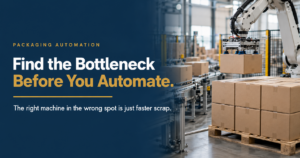
The technologies driving this shift include robotic arms for pick-and-place operations, automated guided vehicles (AGVs) for material transport, and integrated conveyor systems that create a seamless flow from one station to the next. Modern systems can even automate right-sizing, scanning the contents of an order and creating a custom-fit box on the fly, optimizing both material use and shipping costs. Case studies demonstrate the power of this approach, with one company achieving a 50% reduction in co-packing costs and a 40% reduction in transportation costs through process improvements and automation.
Beyond speed and accuracy, automation enhances worker safety by taking over repetitive and physically strenuous tasks, reducing the risk of workplace injuries. Furthermore, smart automated systems generate a wealth of real-time operational data. This data can be analyzed to identify bottlenecks, predict maintenance needs, and continuously optimize the entire packaging process, ensuring the system becomes more efficient over time. By investing in automation, companies are not just improving their current operations; they are building a flexible, scalable, and data-driven foundation for future growth.
The Korpack Way: Building an Invisible System to Drive Your Growth
The evolution of packaging from a simple box to a complex, multi-functional system presents a significant challenge for most businesses. Successfully navigating the competing demands of brand experience, digital integration, sustainability, and operational efficiency requires a level of expertise and integration that is typically beyond the scope of internal teams. The solution is not to try and master every facet of modern packaging, but to partner with a team that has already built the perfect system. This is the core philosophy of Korpack.
The fundamental problem Korpack solves is the fragmentation that plagues traditional packaging management. Instead of treating design, engineering, sourcing, automation, and fulfillment as disconnected tasks, Korpack provides a single, cohesive system where every component operates in concert. This integrated model is the key to transforming packaging from a source of constant problems into a silent, powerful engine for business growth.
This is demonstrated through Korpack’s comprehensive suite of services, each designed to address a specific aspect of the modern packaging challenge.
- Design & Engineering: The process begins with an engineering-first mindset. Korpack’s in-house team doesn’t just design a package to look good on a shelf; they engineer it from day one for line speed, material efficiency, transit durability, and cost-effectiveness. This directly solves the complex, multi-variable problem of creating a package that is at once sustainable, brand-forward, and logistically optimized.
- Machinery & Automation: Korpack provides and installs the automated equipment necessary to achieve the efficiency, accuracy, and scalability required to compete in today’s market. This ensures that the brilliantly engineered package can be assembled and shipped at the speed of modern commerce.
- Contract Packaging (Co-Packing): For many clients, the ultimate step in making packaging invisible is to outsource the entire operation. Korpack’s co-packing services provide the operational expertise to run the system, allowing business leaders to give up day-to-day control in order to gain more strategic focus and peace of mind.
- Packaging Supplies: With a system-wide view, sourcing is strategically aligned with production schedules and material specifications. This prevents last-minute surprises and ensures that the materials used—from corrugated boxes to stretch wrap and labels—are perfectly suited for the application, eliminating a common point of failure in fragmented supply chains.
This integrated approach is powered by a culture defined by the F.A.S.T. methodology: Fearless in tackling complex challenges, Adaptable and agile in finding solutions, Simplistic in delivering clarity, and Technology-driven in harnessing innovation. This culture is led by a team with deep industry expertise, including CEO and Founder Nick Novy, a graduate of Michigan State University’s renowned Packaging Engineering program. This foundation of specialized knowledge ensures that every solution is grounded in sound engineering principles.
The most compelling evidence of this model’s success, however, comes from the voice of the customer. Testimonials speak directly to the results of an integrated system. On damage reduction: “After Korpack redesigned the pack-outs for our appliances, our damage rate was reduced to nearly zero”. On reliability and execution: “Korpack is the most reliable vendor we partner with… flawlessly executed on a complex project and provided 100% on-time delivery with zero defects”. And on responsiveness and partnership: “Korpack’s responsiveness is like none other in the business. They are quick to not only answer my questions, but provide solutions for our projects varying from our easiest to the most complicated”.
Ultimately, the product Korpack delivers is not packaging; it is focus. By absorbing the immense complexity of modern packaging and delivering a seamless, reliable system, Korpack takes a resource-draining problem off a client’s agenda permanently. The true ROI is not just the sum of savings from freight, materials, and damages. It is the exponential value created when a company’s most valuable assets—the time and cognitive energy of its leadership team—are liberated from operational firefighting and redeployed toward core growth initiatives like product innovation, market expansion, and brand building.
Conclusion: Stop Managing Packaging. Start Driving Growth.
The journey of packaging from a simple, fixed-function container to a dynamic, strategic business system is complete. In today’s market, a box is never just a box. It is a storefront, a brand ambassador, a digital portal, a statement of values, and a critical component of the supply chain. Viewing it as anything less is to leave value, efficiency, and competitive advantage on the table.
The traditional, siloed approach of managing packaging as a series of disconnected tasks is no longer tenable. It creates hidden costs, operational friction, and strategic vulnerabilities. The modern imperative is to build a single, cohesive system where design, materials, automation, and fulfillment are engineered to work in harmony. Such a system does not require more management; it requires better architecture.
When packaging is engineered correctly, it becomes a powerful, silent engine driving the business forward. It protects the bottom line by eliminating waste and damage, enhances the top line by creating loyal customers, and builds a scalable foundation for future growth. When it achieves this state, it disappears from the daily list of concerns, allowing leaders to focus on what they do best.
Your job is to build a successful business, not to become an expert in corrugate flute profiles or automated kitting lines. Your best packaging strategy is to partner with a team that has already built the perfect system, so you don’t have to.
Let’s talk about how Korpack can take packaging off your agenda for good. Contact our packaging engineering team today.