
In modern logistics, secondary packaging is no longer just a structural formality—it’s a strategic asset. Often overlooked in favor of primary packaging (the pack that touches the product) or tertiary packaging (pallets and stretch wrap used for shipping), secondary packaging is the critical bridge between the two. It holds multiple units together for retail or distribution and is increasingly becoming a tool for improving both environmental performance and fulfillment speed.
As e-commerce expands and sustainability mandates grow tighter, businesses are reevaluating their packaging infrastructure. Secondary packaging is emerging as a crucial area of innovation, particularly when aligned with optimized logistics practices. In this article, we examine how smart secondary packaging decisions can reduce freight waste, support faster deliveries, and offer tangible supply chain benefits.
What Is Secondary Packaging—and Why It’s Often Misunderstood
Secondary packaging includes items like corrugated cases, shrink-wrapped trays, club-store ready cartons, shelf displays, and multi-pack boxes. Its main functions are to group individual products into shipping units, protect them during transit, and simplify handling in distribution centers or retail environments.
But unlike primary packaging (which is highly branded and consumer-facing), secondary packaging is typically designed for function over aesthetics. That distinction has often relegated it to a cost center in traditional supply chain thinking. However, that’s rapidly changing.
Why Freight Waste Is a Hidden Cost Driver
Transportation costs make up a significant portion of logistics expenses—up to 50% in some supply chains. Much of this cost is tied to freight inefficiencies: under-filled trucks, overuse of dunnage and void fill, poor palletization, and inconsistent box dimensions. All of these stem from decisions made at the secondary packaging level.
Common freight waste sources include:
- Void space in cartons that leads to unnecessary use of filler materials
- Overpackaging, which increases dimensional weight and drives up carrier charges
- Non-stackable cases, reducing truckload and container density
- Mismatch of case sizes with pallet configurations, leading to dead space
According to the Environmental Protection Agency (EPA), packaging accounts for nearly 30% of municipal solid waste in the U.S., a significant portion of which results from inefficient packaging practices.
Optimizing secondary packaging design—case dimensions, stackability, material strength, and modularity—can drastically reduce wasted freight capacity, leading to both financial and environmental gains.
How Secondary Packaging Impacts Delivery Speed
Delivery speed is no longer a nice-to-have; it’s an expectation. In the era of next-day and same-day delivery, especially for consumer packaged goods (CPG), the role of packaging has evolved.
Efficient secondary packaging can:
- Streamline warehouse picking and packing: Pre-configured multipacks and shelf-ready cases reduce pick complexity.
- Enable faster cross-docking and DC operations: Uniform, barcode-ready cartons can be scanned and sorted more efficiently.
- Support automation: Standardized secondary packaging enables compatibility with automated case packers, robotic palletizers, and conveyor systems.
- Improve route optimization: Dense, modular loads improve truck fill rates and simplify route planning.
In many warehouse environments, the time it takes to locate, pick, assemble, and ship an order can be cut significantly when secondary packaging is designed to support these functions.
Sustainability by Design: The Environmental ROI
Sustainability regulations and consumer expectations are reshaping how companies view packaging. Secondary packaging is increasingly evaluated for its lifecycle impact—material use, recyclability, and transportation efficiency.
Some notable trends include:
- Right-sizing algorithms that tailor case dimensions to product loads in real time
- Lighter-weight corrugate and hybrid designs that maintain strength with less material
- Reusable secondary packaging for B2B distribution, like plastic totes
- Recyclable multi-pack formats to replace plastic shrink wrap in beverages and canned goods
By reducing the size and weight of packages, companies can ship more goods per truck, cutting emissions and fuel costs in the process. According to a study by the Sustainable Packaging Coalition, optimizing case pack and pallet configurations can reduce greenhouse gas emissions by as much as 15% per shipment.
Real-World Applications
- Retail Distribution: For high-volume CPG brands, secondary packaging that conforms to retailer-specific standards (e.g., Walmart’s shelf-ready packaging) ensures fewer rejections, faster shelf stocking, and lower labor costs at store level.
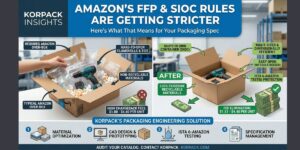
- E-Commerce Fulfillment: E-commerce operations benefit from secondary packaging that fits standard mailer sizes and avoids dimensional weight upcharges. Companies like Amazon are pushing suppliers to adopt “Frustration-Free Packaging” that optimizes this layer.
- Subscription Models: Brands that offer variety packs, bundles, or club offerings can reduce kitting time and damage rates by standardizing on modular secondary packaging that aligns with fulfillment workflows.
- Food and Beverage: Beverage manufacturers are increasingly investing in automated variety-pack systems. These allow glass, PET, and cans to be bundled into efficient, stackable formats that reduce breakage and shipping cost.
Key Considerations for Businesses
When rethinking secondary packaging, companies should evaluate:
- SKU complexity: Does your packaging system scale across a diverse product catalog?
- Retail channel requirements: Are you meeting shelf-readiness and labeling expectations?
- Freight footprint: Can you increase case density per pallet or truckload?
- Speed-to-market: Are your packaging processes aligned with rapid deployment?
- Sustainability mandates: Are your materials and designs supporting carbon reduction goals?
Many organizations now collaborate with packaging engineers or co-packing partners to run simulation models that identify the optimal secondary packaging configuration for both cost and performance.
Conclusion: Designing with Logistics in Mind
Secondary packaging is not just a cost to control—it’s a strategic lever for reducing freight waste and accelerating delivery. When designed thoughtfully, it improves every downstream supply chain metric: cost per unit shipped, delivery speed, shelf readiness, and sustainability.
As the packaging industry embraces automation, data-driven optimization, and eco-friendly mandates, the smartest businesses are those treating secondary packaging as a competitive advantage—not an afterthought.
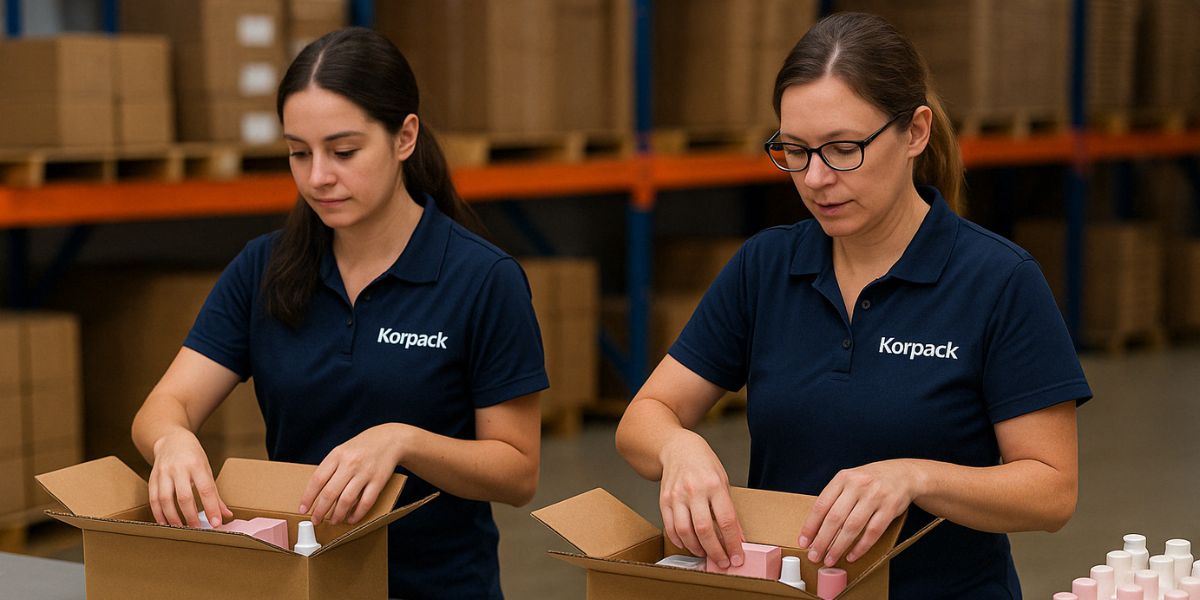
At Korpack, we support this philosophy through engineering-driven secondary packaging design and integrated co-packing solutions that align with retailer standards, freight efficiency, and operational scalability. From Chicago and across the Midwest, we partner with forward-thinking brands to turn packaging into a performance asset—ensuring your supply chain moves faster, cleaner, and smarter.