

The Packaging Rules Are Still Moving. Your Specification Cannot Wait for Them.
If you sell a packaged product in more than one state, you are now complying with more than one packaging rulebook, and the rulebooks do not agree with each other. Seven states run their own extended producer responsibility programs for packaging. A California labeling law is under a court order that stops the state from […]
Retail-Ready Packaging: What the Buyer Actually Enforces.

Getting a product accepted by a major retailer feels like the finish line. It is closer to a new set of rules. Large retailers run detailed, enforced compliance programs that govern how a product must be packaged, labeled, cased, and palletized, and they do not enforce those rules with a conversation. A non-compliant shipment gets […]
Cheese Is Alive, and Its Packaging Has to Respect That

Most food packaging has one job: keep the outside world out. Cheese is more complicated, because cheese is, in a real sense, still alive. Aged cheeses carry living cultures that keep working after the cheese leaves the make room, producing carbon dioxide as they mature. Seal that cheese in a fully airtight pack and it […]
What an SQF-Certified Co-Packer Actually Gives You

When a food or beverage brand outsources packaging to a co-packer, it is also outsourcing its food-safety risk and its retail-audit readiness. If the co-packer is certified, the brand can prove its product was handled to a recognized standard. If the co-packer is not, the brand inherits the gap, and a retailer audit can surface […]
Why Your Boxes Crush When You Stack Them: Grain Direction and Compression Strength
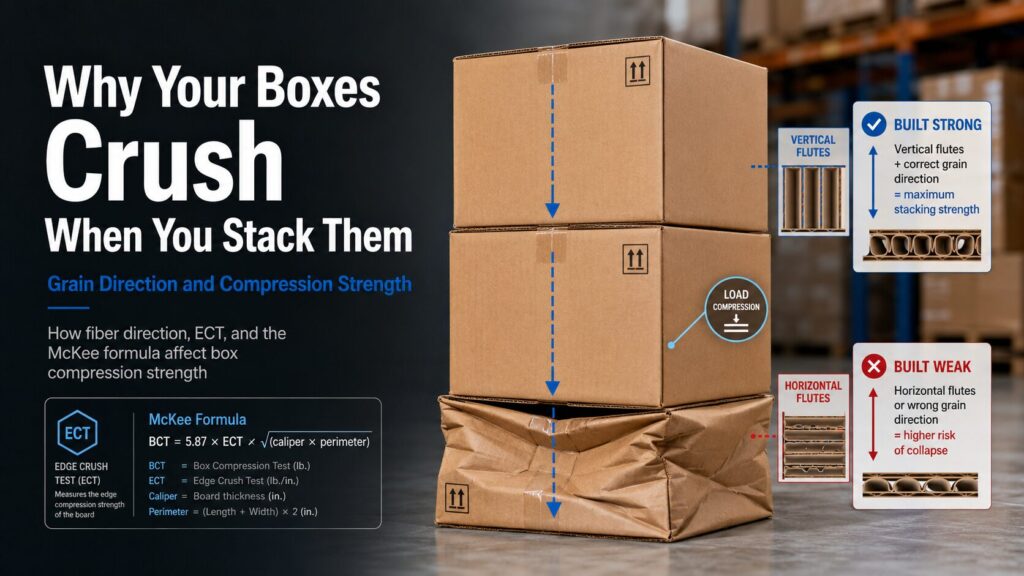
A corrugated box gets most of its stacking strength from one thing: the direction its fibers and flutes run. Paper is far stronger along the grain than across it, and corrugated flutes are far stronger standing vertically than lying flat. Get those two directions right and a box carries the load above it. Get them […]
What Is ISPM 15? A Plain-Language Guide for US Manufacturers and Exporters
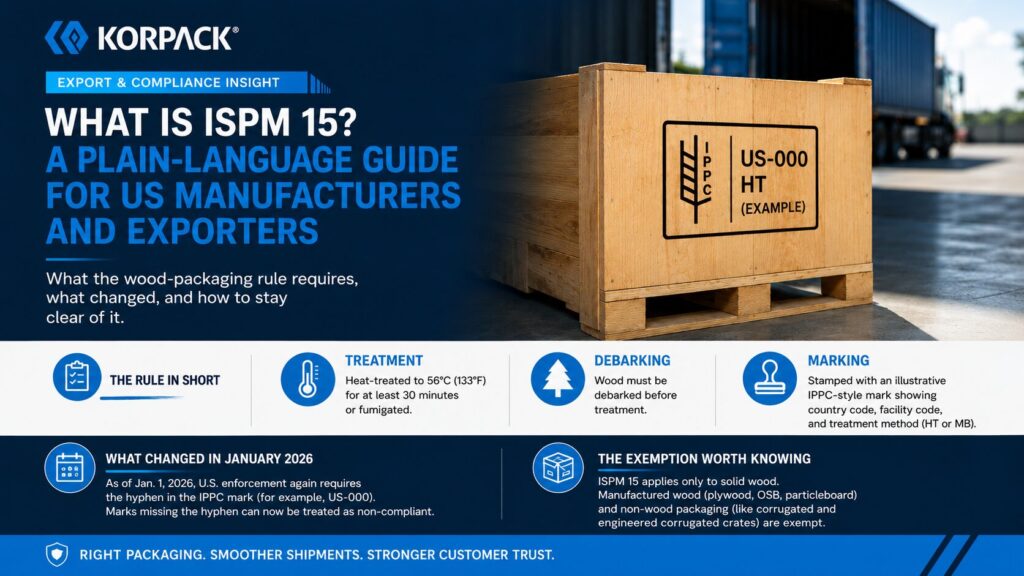
A transformer bushing leaves your dock in good shape. Three weeks later it reaches a customer in another country, they open the crate, and the porcelain is cracked. Now you are re-machining the part, paying air freight to get the replacement there fast, running the customs paperwork a second time, and processing a warranty claim. […]
Substantiated Sustainability – Why ‘This Box Is Recyclable’ Is No Longer Enough for F&B Brands
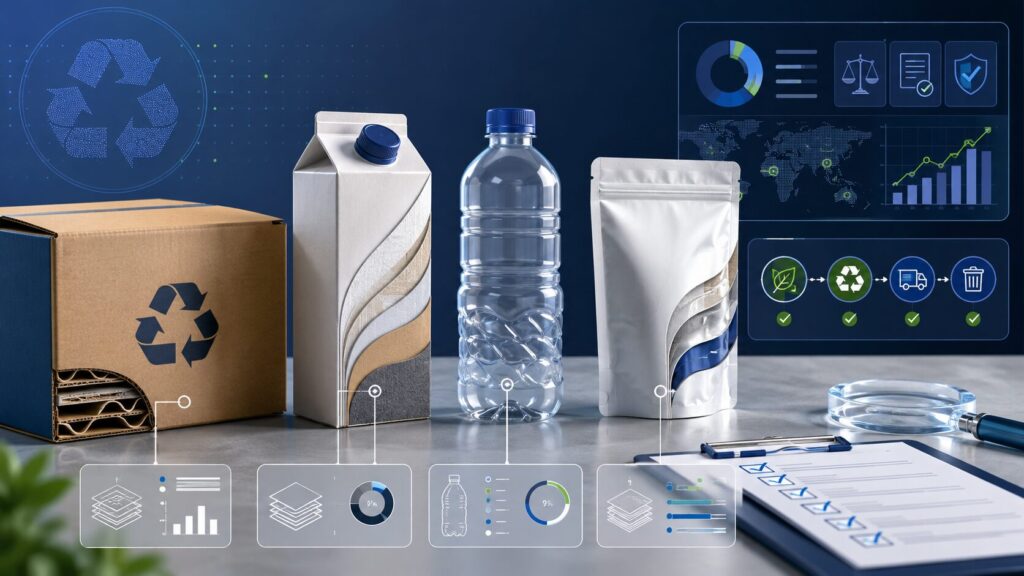
The Recycling Symbol Isn’t a Compliance Strategy For years, food and beverage brands have treated sustainability claims on packaging as a marketing exercise. Print the recycling symbol. Add “made from recyclable materials” to the carton. Maybe mention post-consumer content in a press release. Check the box, move on. That era is over. Extended Producer Responsibility […]
Physical AI Is Coming to US Packaging Lines – Here’s What Ops Leaders Actually Need to Know.

Open any manufacturing trade publication in 2026 and you will see the same phrase repeated everywhere: Physical AI. It is on the cover of PMMI’s latest report. It was a headline theme at PACK EXPO International. And if you listen to the keynote speakers, it sounds like every packaging line in America will be run […]
Maine Led the Way. Now the Whole Map Is Changing.
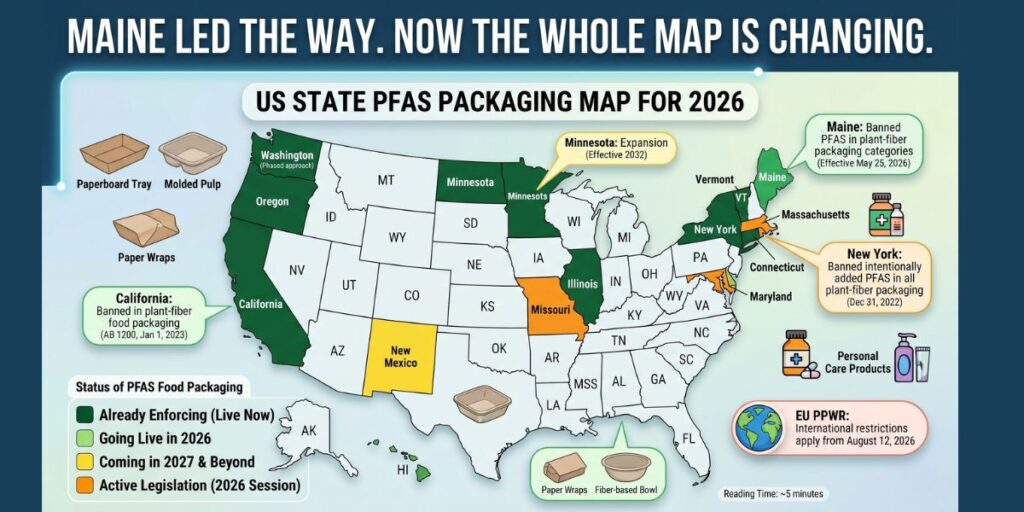
On May 25, 2026, Maine will enforce a ban on PFAS in nine categories of plant-fiber food contact packaging. If your paperboard trays, molded pulp containers, paper wraps, or fiber-based bowls contain intentionally added PFAS above incidental presence, they cannot legally be sold in Maine after that date. But here is the part most food […]
CPG’s Race Against Time: Cutting Time-to-Market with OpEx Co‑Packing
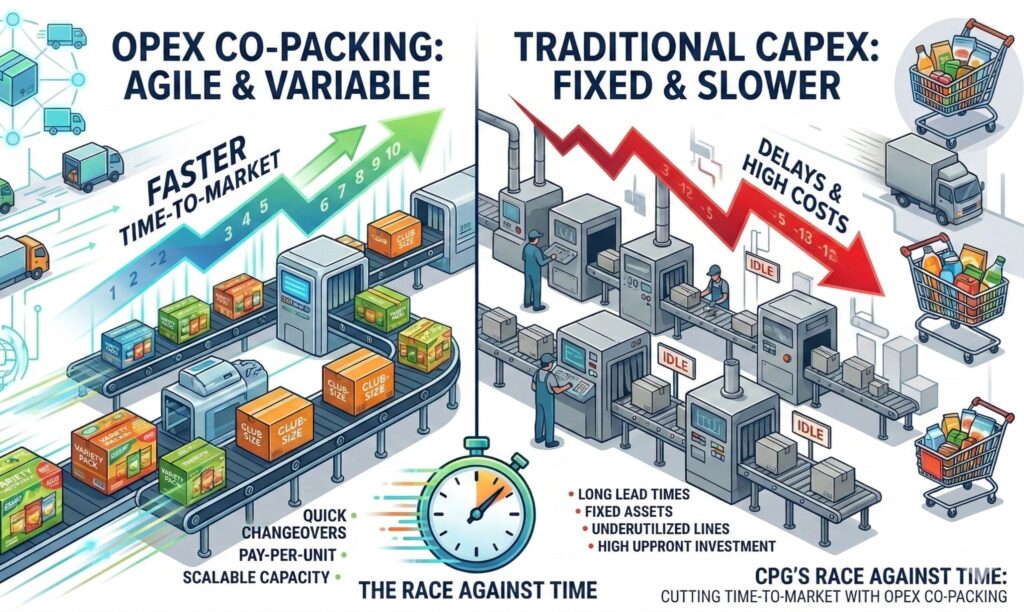
Consumer Packaged Goods (CPG) companies are under more pressure than ever to move faster. In 2025, major retailers like Walmart and Target ratcheted up On-Time In-Full (OTIF) delivery standards to nearly 98%, penalizing delays with fines of about 3% of COGS (Cost of Goods Sold). At the same time, raw material prices swung unpredictably and […]