
When plastic waste in the ocean grows exponentially, the term “circular economy” must become incorporated into companies packaging usage. Packaging is one of the lead components of an overall product often disposed of, so there is plenty of room to begin implementing greener packaging that can continue to be reused and recycled.
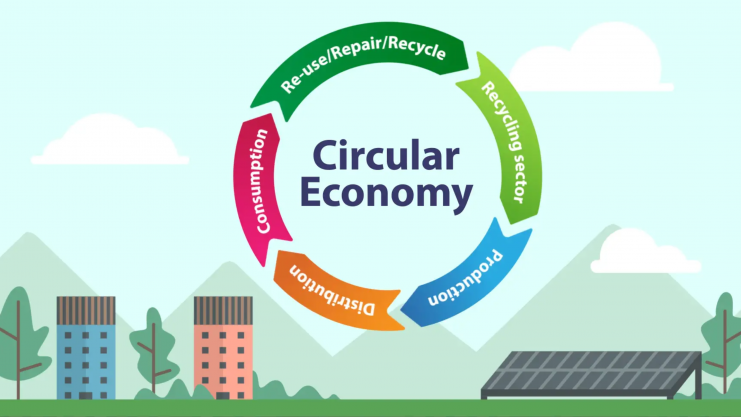
The best definition of the circular economy we’ve seen is this:
“The circular economy is an economic system in which materials are designed to be used, not used up. From the outset, products and the systems they are contained within are designed to make sure no toxins are leaked, no materials are lost, and the maximum use is achieved from every material, process, and component. If done successfully, the circular economy benefits society, the environment, and the economy.” – The Ellen MacArthur Foundation
Why All the Fuss About Plastics?
Our lives seemingly revolve around plastics. A day doesn’t go by that we don’t in some way come in contact with plastic. In the past 50 years, the use of plastics has increased twentyfold. While this material provides us with many benefits, it’s apparent that there are negative consequences if it becomes waste or pollution.
Research has found that most plastic packaging is used only once, and only 14% is collected for recycling. 95% of the value of plastic packaging material, worth more than $100 billion annually, is lost to the economy.
While we must improve recycling, we can’t just recycle our way out of the plastic issues we currently face. Reuse models should be explored as a preferred solution, reducing our dependence on single-use plastic packaging. Reuse models have shown an economically beneficial opportunity for at least 20% of plastic packaging.
Creating a Circular Economy for Plastics
Working together, some of the world’s most creative minds are examining plastics and the circular economy. Their vision for a circular economy for plastics has six key points:
- The elimination of unnecessary or problematic plastic packaging through innovation, redesign, and new delivery models is a top priority.
- Reuse models are applied where possible, which will reduce the need for single-use packaging.
- All plastic packaging is 100% reusable, recyclable, or compostable.
- Not only is it possible for all plastic packaging to be reused, recycled, or composted, but it is put into practice universally.
- The use of plastics is wholly independent of the consumption of finite resources.
- All plastic packaging is free of hazardous chemicals, and the health, safety, and rights of all people involved are respected.
Global consumer good companies, retailers, packaging manufacturers, and plastic producers will need to work together to implement this vision for a circular economy and include businesses involved in the collection, sorting, and reprocessing.
This vision for a circular economy for plastic is already being implemented by a network of national and cross-border initiatives, called The Plastics Pact, a globally aligned response to plastic waste and pollution that enables vital knowledge sharing and coordinated action.
If we want to free our oceans from plastics, we have to do more than increase the number of clean-up projects. We have to rethink the way we make, use, and re-use plastics so that they don’t become waste in the first place. We can all play a role in the circular economy as we act upon innovations for a “new normal” for plastics.
Being a leader in the circular economy is central to Korpack’s company values. We are driven to incorporate sustainability whenever and wherever possible. Talk with us about how we can partner together and make our planet more livable for future generations.