

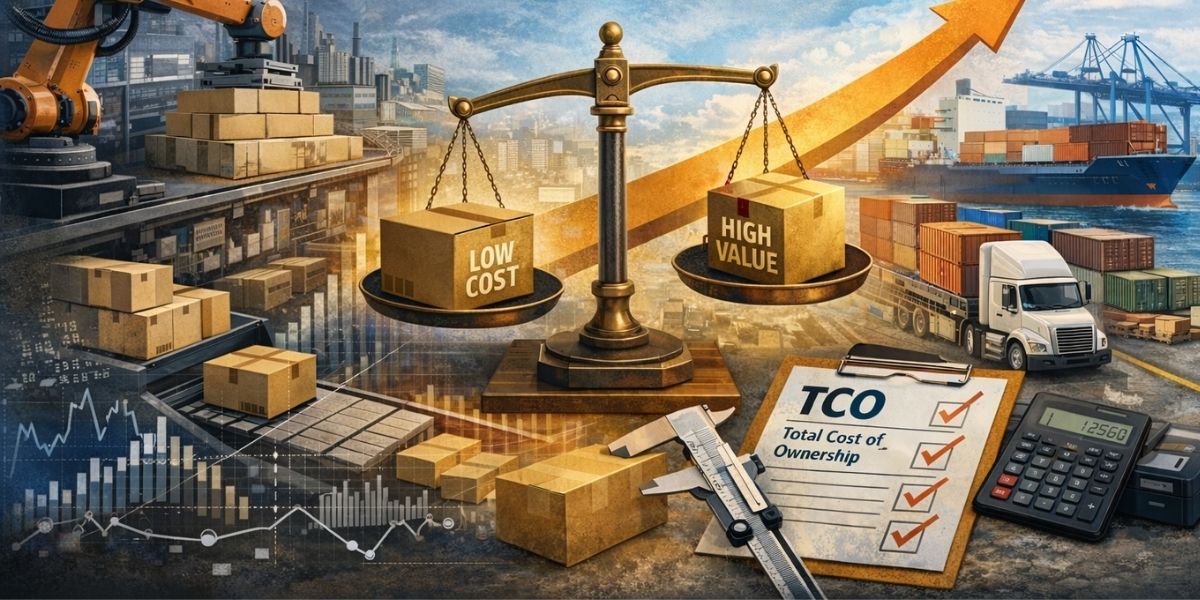
The fiscal landscape of 2026 presents a distinct and unforgiving set of challenges for the North American manufacturing and logistics sectors. We stand at a pivotal juncture where the traditional procurement playbooks—relied upon for decades to squeeze marginal gains from supply chains—are not only failing but actively eroding profitability. Following the significant market consolidation and demand slumps observed throughout 2025, the era of pursuing the lowest unit price per corrugated box is effectively over. The corrugated packaging market has weathered a “historic correction,” with shipment volumes dropping to decade lows, yet pricing power remains firmly entrenched with the producers who have successfully shifted their strategy from market share to margin protection.1
For C-suite leaders, the directive for 2026 is clear: the focus must shift from cost containment to cost optimization. This is the era of “Fee-Smart” engineering—a disciplined, data-driven approach that prioritizes Total Landed Cost (TCO) over the deceptive simplicity of Unit Price. In a high-interest-rate environment, where the cost of capital penalizes inefficiency and excess inventory with unprecedented severity, the “hidden factory” of inefficiency poses a greater threat to the bottom line than material costs alone.
This report serves as a comprehensive strategic blueprint for procurement leaders, operations executives, and packaging engineers. It analyzes the structural changes in the US packaging market, quantifies the lingering impact of high interest rates on inventory carrying costs, and delineates the operational necessity of re-evaluating packaging through an engineering lens. By leveraging diagnostic tools such as the Plant Audit Review (PAR) and addressing the “Agility Gap” through automated co-packing partnerships, organizations can transform packaging from a commoditized expense into a strategic asset that drives ROI and protects profitability in a constrained economy.
1. Market Forensics: Anatomy of the 2025 Slump and the New Supply Paradigm
1.1 The Post-Pandemic Correction and Demand Destruction
To navigate the procurement strategies required for 2026, one must first perform a forensic analysis of the volatility that characterized the preceding 24 months. The US corrugated packaging market experienced a severe contraction in 2025, a phenomenon described by industry analysts as a “historic correction” that fundamentally altered the supply-demand balance.2 After the pandemic-induced surge in e-commerce and essential goods packaging during 2020 and 2021, demand did not merely stabilize; it plummeted. By the third quarter of 2025, US corrugated box shipments had fallen to their lowest levels since 2015, erasing a decade of volume growth.1
This decline was not a simple cyclical dip but the result of a “bullwhip effect” in inventory normalization. Retailers and manufacturers, having overstocked in response to the supply chain fragility of the pandemic years, spent the majority of 2024 and 2025 in a destocking phase.2 Simultaneously, macroeconomic pressures—specifically persistent inflation and high interest rates—dampened consumer spending on discretionary goods. Categories such as electronics, apparel, and durable home goods, which are traditionally heavy users of corrugated packaging, saw significant volume retractions.2
The data underscores the severity of this slump. Per-capita box usage in the United States dropped to more than 20% below its 1999 peak, signaling not just a temporary downturn but a potential structural change in demand.1 E-commerce giants, striving for efficiency and sustainability, began shifting away from traditional corrugated boxes toward lightweight mailers and “right-sized” packaging solutions, further eroding tonnage demand.4 This “dematerialization” of the supply chain means that even as economic activity recovers, the corresponding volume of corrugated board may not rebound at the same rate.
1.2 The Supply Side Response: Consolidation and “Value over Volume”
The reaction from the supply side—the major paper mills and integrated packaging producers—was decisive, coordinated, and transformative. Facing eroding margins and lackluster demand, the industry’s leadership group, which controls approximately 65% of regional capacity, executed a strategic pivot from chasing market share to protecting price integrity. This strategy, explicitly termed “value over volume,” manifested in the permanent closure of mills and significant capacity curtailments.3
Between 2023 and the end of 2025, the industry removed approximately 3.5 to 4 million tons of capacity from the North American market.2 Major players like International Paper and Westrock (now Smurfit Westrock) executed mill closures at a scale unseen since the Great Recession.2 For example, International Paper closed facilities in Georgia and other key regions, removing nearly 9% of US containerboard capacity in less than a year.4
The strategic implication of these closures is profound for procurement in 2026. By cutting the “denominator” (total capacity), producers have managed to keep utilization rates high even as the “numerator” (demand) softened. This “manufactured tightness” has allowed mills to maintain, and in some cases increase, pricing leverage despite falling volumes.3 Buyers entering 2026 expecting price concessions due to weak demand will be met with a disciplined supply base that is willing to walk away from low-margin volume. The market has been engineered to support pricing, meaning that cost savings for buyers must come from internal efficiency and engineering, not from squeezing suppliers for lower unit costs.
1.3 The 2026 Outlook: Stabilization without Surge
Looking ahead, the market is expected to stabilize, though a rapid V-shaped recovery is unlikely. Forecasts suggest that while the market size for corrugated boxes will grow—projected to reach $181.1 billion in 2025 and continue growing at a CAGR of 4.5% through 2032 5—the nature of this growth is evolving. The focus is shifting toward higher-value segments such as e-commerce, processed foods, and sustainable solutions.6
However, the “Value over Volume” discipline adopted by producers means that the supply glut that typically benefits buyers in a down cycle does not exist. Procurement teams must operate under the assumption that base material costs will remain firm. The table below summarizes the capacity shifts that define the 2026 procurement environment.
Table 1: Market Dynamics Shift (2024-2026)
| Metric | 2024 Status | 2025 Status | 2026 Forecast | Strategic Implication |
| Market Size (Global) | $172.0 Billion 5 | $181.1 Billion 5 | Continued Growth (CAGR ~4.5%) | Growth is value-driven, not volume-driven. |
| US Box Shipments | Stagnant | Lowest since 2015 1 | Gradual Recovery (1.6% growth) 8 | Buyers have less leverage on volume alone. |
| Mill Capacity | High Capacity | -10% Reduction 8 | Tight / “Manufactured Tightness” | Supply shocks will spike prices immediately. |
| Pricing Strategy | Volume-driven | Value-driven (Consolidation) | Fee-Smart / TCO Focused | Unit price reductions are unlikely; focus on TCO. |
| Key Driver | Inventory Build | Destocking / Closures | Efficiency & Sustainability | Engineering is the new procurement lever. |
2. The Financial Pressure Cooker: Interest Rates and the “Hidden Factory”
2.1 The Mathematics of Carrying Cost in a High-Rate Environment
In the low-interest-rate environment of the 2010s, the cost of capital was negligible. This financial reality encouraged a procurement strategy focused on volume discounts—buying large runs of packaging to secure a lower per-unit price, even if it meant holding months of inventory. However, the economic reality of 2026 is fundamentally different. With interest rates remaining elevated relative to the previous decade, the cost of capital has become a significant, punishing line item on the P&L.10
Inventory carrying costs—the total cost of holding goods in stock—are frequently underestimated by procurement teams focusing on “invoice price.” While many organizations tally only storage fees (warehouse rent), the true carrying cost includes capital costs (interest), service costs (insurance, taxes), risk costs (obsolescence, damage), and operational handling. In a high-interest environment, capital costs alone can drive the total carrying cost to between 20% and 30% of the inventory’s value annually.11
For a C-suite executive, this math dictates a radical shift in strategy. Saving $0.05 per box on a large run is a false economy if those boxes sit in a warehouse for six months, incurring a 25% carrying cost. The “Fee-Smart” approach recognizes that cash flow and working capital efficiency are paramount. Procurement must pivot from “buying cheap” to “buying smart,” optimizing for inventory velocity rather than volume discounts.
Consider the financial impact on a standard inventory lot:
- Scenario A (Volume Buy): Buy 100,000 units at $1.00 each. Hold for 6 months.
- Capital tied up: $100,000.
- Carrying Cost (25% annual rate / 2): $12,500.
- Effective Cost per Unit: $1.125.
- Scenario B (JIT Buy): Buy 20,000 units at $1.05 each. Hold for 1 month.
- Capital tied up: $21,000.
- Carrying Cost (25% annual rate / 12): $437.
- Effective Cost per Unit: $1.07.
In this simplified model, the “more expensive” unit price yields a lower effective cost because it respects the cost of capital.
2.2 The “Hidden Factory” of Inefficiency
Beyond the financial cost of capital, a disconnected approach to packaging creates what Korpack describes as a “Hidden Factory.” This metaphor refers to the unmeasured, non-value-added activities that consume organizational resources but produce no sellable product.14 When packaging is treated as a commodity managed solely by procurement, the operational burdens are shifted to other departments, creating a phantom cost structure that is rarely audited.
The “Hidden Factory” operates silently, eroding margins through:
- Operations & Labor: Dealing with line stoppages due to poor material quality or “cheap” boxes that jam automated erectors.
- Marketing & Brand: Handling brand damage and customer churn resulting from crushed shipments or poor unboxing experiences.
- Finance: Processing write-offs for obsolete inventory that was bought in bulk but never used due to a product design change.
- Warehousing: Managing the physical burden of oversized pallets shipping “air,” which reduces warehouse capacity and increases handling times.
In 2026, the goal is to decommission this factory. By integrating engineering into the procurement process, companies can eliminate these hidden costs. For example, a slightly more expensive, high-performance box that runs faster on automation lines and reduces damage rates will yield a significantly higher ROI than a cheaper, lower-quality alternative.
Table 2: The “Hidden Factory” Cost Impact Analysis
| Cost Category | Traditional View (Unit Price Focus) | Fee-Smart View (TCO Focus) | Impact of High Interest Rates |
| Material | $0.85 / unit | $0.90 / unit (Right-sized, stronger) | Neutral |
| Inventory Carrying Cost | Ignored (or minimal) | 25% annually (Capital + Storage) | High Negative Impact |
| Freight | Standard Rate | -15% (Optimized Density) | Reduces impact of fuel surcharges |
| Damage/Returns | “Cost of doing business” (3%) | <0.5% (Engineered protection) | Protects Brand Equity & CLV |
| Labor (Packing) | High (Manual folding/taping) | Low (Automation ready) | Mitigates wage inflation |
| Total Landed Cost | $1.45 / unit | $1.28 / unit | 12% Net Savings |
Analysis: While the Fee-Smart box costs $0.05 more upfront, it generates substantial savings in freight, damage, and labor. Crucially, by enabling faster throughput and JIT delivery (via a partner like Korpack), it drastically reduces the inventory carrying cost, which is the “silent killer” in a high-rate environment.
2.3 The Agility Gap: Fixed Assets vs. Flexible Partnership
The volatility of the 2025 market highlighted another critical weakness in the traditional volume-based model: rigidity. Companies that invested heavily in fixed, in-house packaging lines to chase low unit costs found themselves unable to pivot when consumer preferences shifted. This created an “Agility Gap”—the time-to-market discrepancy between rigid brands and those leveraging flexible partners.15
Rigid competitors measure this gap in months of planning, re-tooling, and capital expenditure. In contrast, agile brands partnered with automated co-packers measure execution in days. In 2026, the cost of rigidity is high. Retailers demand shorter lead times, custom variety packs, and rapid promotional execution. A brand burdened by fixed assets and high inventory levels cannot respond quickly. Automated co-packing partners, who utilize modular production cells and digital changeovers, allow brands to close this gap. The “Fee-Smart” executive values this optionality, recognizing that the ability to seize a market opportunity is often worth more than the marginal savings on a corrugated case.
3. Deconstructing Unit Price Myopia: The TCO Doctrine
3.1 The TCO Equation in the New Era
To implement a “Value over Volume” strategy, organizations must adopt a rigorous definition of Total Landed Cost (TCO). TCO is not merely the sum of the invoice price and freight; it is a holistic calculation of every cost incurred from the moment a package is designed to its final disposal or recycling.16 In the context of the 2026 efficiency pivot, TCO must be viewed through four primary lenses: Acquisition, Logistics, Operations, and Risk.
The following formula encapsulates the modern TCO approach:
$$TCO = P_{unit} + C_{logistics} + C_{ops} + C_{risk} + C_{admin}$$
Where:
- $P_{unit}$: The purchase price of the packaging material (the traditional focus).
- $C_{logistics}$: Freight-in, warehousing, drayage, duties, and last-mile delivery.
- $C_{ops}$: Labor for packing, line throughput efficiency, machine downtime, and waste disposal.
- $C_{risk}$: Damage claims, replacements, brand erosion, and obsolescence.
- $C_{admin}$: Procurement time, vendor management, compliance auditing, and “hidden factory” management.
3.2 Logistics: The Weight of “Shipping Air”
Logistics costs often constitute the largest component of TCO outside of the material itself. In 2026, with freight rates stabilizing but remaining elevated due to labor and fuel inputs, the efficiency of the package in transit is critical. “Shipping air”—using oversized boxes with excessive void fill—is a primary driver of inflated TCO.18
Packaging engineers utilize “cube utilization” metrics to minimize this cost. By right-sizing packaging to the product, companies can fit more units on a pallet and more pallets on a truck. A 15% increase in pallet density can result in a direct reduction in annual freight spend by tens of thousands of dollars.18 Furthermore, dimensional (DIM) weight pricing by carriers means that a large, light box is charged as if it were heavy. “Fee-Smart” engineering attacks this inefficiency directly, optimizing package dimensions to lower the billable weight.
Consider the multiplier effect of a 1-inch reduction in box height:
- Unit Level: Less corrugated material used (lower $P_{unit}$).
- Case Level: Less void fill required (lower $P_{unit}$).
- Pallet Level: More layers per pallet (lower warehousing $C_{logistics}$).
- Truck Level: More pallets per truck (lower freight $C_{logistics}$).
3.3 Operations: The Cost of Throughput
The operational component of TCO focuses on the packing line. A cheap box that jams an automated case packer causes downtime that far exceeds the material savings. Similarly, complex packaging designs that require excessive manual labor to assemble slow down fulfillment and increase labor costs—a critical factor given the tightening labor market in manufacturing.19
Fee-Smart engineering evaluates the “runnability” of materials. It asks: Does this corrugated board have the necessary structural integrity to withstand high-speed automation? Is the design intuitive for manual packers, minimizing training time? Korpack’s approach emphasizes that engineering is an investment in operational velocity.18 A box that allows a packer to assemble 10 units per minute instead of 8 effectively reduces the direct labor cost per unit by 20%.
3.4 Risk: The Price of Damage and Brand Reputation
Perhaps the most overlooked element of TCO is the cost of failure. Damage in transit is not just a replacement cost; it is a customer retention issue. In the e-commerce era, the unboxing experience is the primary physical touchpoint between the brand and the consumer.20 A damaged product, or even a pristine product in a crushed box, degrades brand equity.
Analysis shows that the cost of replacing a damaged e-commerce shipment can be up to 17 times the cost of the original shipping.6 Therefore, investing in higher-quality, engineered packaging that ensures product integrity is a “Fee-Smart” decision. It lowers the “Risk” variable in the TCO equation, protecting the bottom line from returns, restocking fees, and lost Customer Lifetime Value (CLV).
3.5 Administrative Drag: The Cost of Complexity
Finally, TCO includes the administrative burden of managing the supply chain. A fragmented vendor base—where design, material sourcing, and co-packing are handled by different entities—creates “administrative drag”.21 This includes the time spent by procurement teams managing multiple POs, coordinating hand-offs, and resolving disputes.
Consolidating spend with a single, integrated partner reduces this friction. It moves the relationship from transactional to strategic, allowing internal teams to focus on strategic initiatives rather than tactical firefighting.14 The cost of a procurement manager spending 10 hours a week chasing orders across five vendors is a real cost that must be factored into the “Fee-Smart” calculus.
4. “Fee-Smart” Engineering: The New Operational Standard
4.1 Defining “Fee-Smart” Engineering
“Fee-Smart” engineering is the tactical application of the TCO philosophy. It is a discipline that rejects the “good enough” approach to packaging in favor of precise, data-driven optimization. It is “Fee-Smart” because it intelligently navigates the various fees inherent in the supply chain—DIM weight fees, storage fees, labor fees, and damage chargebacks—to minimize the total landed cost.16
This approach requires a shift in mindset from “Buying” to “Engineering.” Procurement leaders must partner with packaging engineers who utilize CAD modeling, compression testing, and rapid prototyping to validate designs before they hit the production line.18 This de-risks the launch process and ensures that the packaging is optimized for every step of the journey, from the factory floor to the customer’s doorstep.
4.2 Right-Sizing and Material Science
At the core of Fee-Smart engineering is “Right-Sizing.” This is the process of designing packaging that fits the product as closely as possible, minimizing void fill and outer dimensions. The benefits are multi-faceted:
- Material Reduction: Less corrugated board and less void fill (plastic air pillows, paper) directly reduce material costs and environmental impact.22
- Freight Savings: Smaller boxes reduce DIM weight and increase pallet density, lowering the per-unit freight cost.22
- Damage Reduction: A tight fit prevents the product from shifting inside the box during transit, a common cause of damage.22
Furthermore, Fee-Smart engineering leverages material science to select the correct board grade. Over-specifying packaging (using a stronger box than necessary) is waste; under-specifying (using a box that crushes) is risk. Engineers use tools like the Edge Crush Test (ECT) to determine the precise strength required for the specific supply chain profile, ensuring optimal protection at the lowest necessary cost.18 For example, switching from a Double Wall board to a high-performance Single Wall board with the same ECT rating can reduce material weight and cost without compromising stacking strength.
4.3 Design for Automation
As labor markets tighten and wages rise, automation becomes a critical lever for efficiency. However, automation requires precision. A human packer can compensate for a slightly warped box or a misaligned tab; a machine cannot. Fee-Smart engineering designs packaging specifically for automation compatibility.15
This involves strict adherence to tolerances and the use of consistent, high-quality materials. It also means designing for the future of automation. For example, ensuring that packaging is compatible with robotic pick-and-place systems or automatic case erectors. By aligning packaging design with automation capabilities, companies can increase line speeds, reduce downtime, and lower the labor cost per unit.23
4.4 Sustainability as an Efficiency Driver
In 2026, sustainability is no longer just a corporate social responsibility (CSR) metric; it is a component of Fee-Smart engineering. Sustainable designs often align with efficiency goals. Lightweighting reduces material use and freight costs. Recyclable materials reduce disposal fees and align with Extended Producer Responsibility (EPR) regulations that are becoming increasingly prevalent.10
Moreover, consumers are increasingly demanding sustainable packaging. A “Fee-Smart” design that eliminates plastic void fill in favor of engineered paper solutions not only reduces cost but also enhances the customer experience and brand perception.6 This alignment of financial and environmental goals is a hallmark of the 2026 efficiency pivot.
5. Diagnostic & Execution: Korpack’s Plant Audit Review (PAR)
5.1 The Need for Diagnostics
You cannot fix what you cannot see. The “Hidden Factory” of inefficiency is often invisible to internal teams who are entrenched in daily operations. Processes that are inefficient become “the way we’ve always done it.” To break this inertia and identify Fee-Smart opportunities, an external, objective perspective is required. This is the function of Korpack’s Plant Audit Review (PAR).18
The PAR is not a sales pitch; it is a diagnostic deep dive. It brings a team of accredited packaging engineers and supply chain experts onto the factory floor to analyze the entire packaging ecosystem. The goal is to identify bottlenecks, waste, and disconnects that are inflating TCO. It transforms packaging from a subjective art into an objective science.
5.2 Anatomy of a Plant Audit Review (PAR)
A comprehensive PAR evaluates the packaging supply chain across several dimensions:
- Material Flow & Storage: How are materials received and stored? Is valuable warehouse space being consumed by slow-moving packaging inventory? Are high-interest-rate carrying costs being ignored? The audit quantifies the cost of space and capital tied up in packaging SKUs.
- Packaging Design & Specification: Are the current boxes right-sized? Are materials over-spec’d? Is “shipping air” inflating freight bills? Engineers analyze existing SKUs against product dimensions to calculate the “air-to-product” ratio.
- Line Efficiency & Ergonomics: Is the packing line optimized for speed? Are manual motions wasted? Is machinery calibrated correctly to prevent downtime? The audit studies the motion economy of packers and the uptime statistics of machinery.
- Damage & Waste Analysis: What is the actual scrap rate? Where does damage occur? Are returns being tracked to specific packaging failures? The audit reviews damage logs and customer return data to pinpoint structural failures.
- Automation Readiness: Where can labor be reduced through targeted automation? Is the current packaging compatible with future automation investments? The audit provides a roadmap for automation integration.
5.3 Case Study Simulation: The Financial Impact of PAR
Consider a hypothetical mid-sized CPG manufacturer struggling with margin compression in 2025.
- The Problem: The company was buying standard stock boxes to save on tooling costs. However, these boxes were 20% larger than necessary, requiring excessive void fill and reducing pallet density. Furthermore, the loose fit caused a 3% damage rate during shipping.
- The PAR Diagnosis: The Korpack engineering team identified that investing in custom tooling for a right-sized box would increase the unit cost by $0.05 but would reduce void fill usage by 50% and increase pallet density by 15%.
- The Result: The switch to the engineered, right-sized box increased the “box price” but reduced the Total Landed Cost by 18%. Freight savings alone paid for the tooling in three months. Damage rates dropped to near zero, improving customer satisfaction.
This simulation illustrates the power of the PAR. It shifts the focus from the unit price (which went up) to the TCO (which went down significantly). In a high-interest, margin-compressed environment, this is the only math that matters.
5.4 De-Risking the Supply Chain
Beyond cost, the PAR serves as a risk mitigation tool. By auditing suppliers and specifications, Korpack engineers ensure compliance with retailer requirements and regulatory standards.23 This prevents costly chargebacks and rejections from major retailers, which can be a silent killer of profitability. The PAR also identifies single points of failure in the supply chain, allowing companies to build resilience through diversification or strategic partnerships.26
6. Strategic Procurement: From Transactional to Integrated
6.1 The End of Spot-Buying
The volatile market of 2025 taught procurement leaders a harsh lesson: transactional relationships fail under stress. When capacity tightened due to mill closures, spot buyers were the first to face shortages and price hikes. In 2026, the strategy must shift from transactional spot-buying to integrated, long-term partnerships.27
An integrated partner, like Korpack, acts not just as a vendor but as an extension of the internal team. They provide the engineering, the sourcing, and the logistics coordination. This consolidation of spend leverages the partner’s buying power and prioritizes the client’s needs during market fluctuations. It also enables more sophisticated supply chain solutions, such as Vendor Managed Inventory (VMI).
6.2 Vendor Managed Inventory (VMI) in a High-Rate World
In a high-interest-rate environment, holding inventory is expensive. VMI programs transfer the burden of inventory management to the supplier. The supplier monitors inventory levels and replenishes stock as needed, often holding the inventory on their books until it is delivered to the client’s floor.25
This improves the client’s cash conversion cycle and frees up working capital. It also reduces the risk of stockouts and overages. For a “Fee-Smart” executive, VMI is a financial tool as much as a logistical one. It converts fixed inventory costs into variable costs, aligning spend with revenue. Instead of tying up $100,000 in packaging inventory for six months (incurring interest), the company pays for packaging only as it is consumed.
6.3 The Role of Co-Packing and Automation
For many brands, the most efficient packaging line is the one they don’t own. Contract packaging (Co-Packing) allows brands to leverage the efficiency and automation of a specialized partner without the capital investment.25 Korpack’s automated co-packing services bridge the “Agility Gap,” allowing brands to scale production up or down rapidly without worrying about labor availability or machine utilization.15
This is particularly relevant for promotional runs, variety packs, and display builds—complex tasks that disrupt standard production lines. By outsourcing these tasks to an automated co-packer, operations teams can focus on their core competencies while ensuring that the packaging execution is fast, accurate, and cost-effective. The co-packer absorbs the complexity of labor management and equipment maintenance, providing a fixed cost per unit that is predictable and scalable.
Table 3: 2026 Procurement Strategy Matrix
| Strategic Pillar | Action Item | KPI for Success |
| Audit | Conduct Plant Audit Review (PAR) | Identified “Hidden Factory” savings > 5% of spend |
| Engineer | Implement Right-Sizing & Cube Optimization | Freight spend reduction / Pallet density improvement |
| Partner | Consolidate vendors; Evaluate Co-Packing | Reduction in Admin Drag / Agility Gap closure (lead time) |
| Inventory | Shift to VMI / JIT models | Reduction in Working Capital / Carrying Cost % |
| Sustainability | Adopt Monomaterial / Recyclable designs | EPR Compliance / Carbon footprint reduction |
7. The Technology & Sustainability Nexus
7.1 Smart Packaging: The Digital Thread
The future of packaging is connected. Smart packaging technologies, such as RFID, NFC, and QR codes, are transforming boxes into digital assets.28 These technologies enable real-time tracking, inventory visibility, and consumer engagement.
- Operational Efficiency: RFID tags allow for automated inventory counting and tracking, reducing labor and improving accuracy.30 This visibility helps identify bottlenecks in the supply chain and reduce “shrinkage” (loss/theft).
- Consumer Experience: NFC and QR codes provide a direct digital link to the consumer, offering product information, authentication, and marketing content.29 This turns the package into a media channel, increasing its value proposition beyond simple protection.
7.2 Sustainability as TCO Reduction
As noted, sustainability is a key driver of the 2026 market. But true sustainability is about efficiency. “Fee-Smart” engineering targets waste—waste of material, waste of space, waste of fuel. By reducing the physical footprint of the packaging, companies reduce their carbon footprint and their costs.31
Furthermore, as Extended Producer Responsibility (EPR) laws come into effect in more states, the cost of non-compliance (fees, taxes) will rise.19 Proactively adopting sustainable, recyclable materials is a risk management strategy that protects the company from future regulatory costs.
7.3 Automation and Labor Resilience
The manufacturing sector faces a chronic labor shortage. Packaging lines that rely on manual labor are vulnerable to turnover, wage inflation, and inefficiency. Automation is the hedge against these risks. Fee-Smart procurement prioritizes partners and solutions that leverage automation to ensure consistency and cost control.19 Whether it is investing in internal automation or partnering with an automated co-packer like Korpack, the goal is to decouple operational capacity from labor market volatility.
8. Conclusion: The Roadmap to 2026
The pivot to 2026 is a pivot from simplicity to sophistication. The days of “three bids and a buy” for corrugated boxes are over. The market has consolidated, interest rates have redefined the cost of capital, and the operational demands of the supply chain have become infinitely more complex.
To succeed in this environment, C-suite leaders must embrace “Fee-Smart” engineering. This means:
- Rejecting Unit Price Myopia: Accept that the lowest box price often yields the highest Total Landed Cost.
- Auditing the “Hidden Factory”: Use tools like Korpack’s PAR to uncover and quantify the invisible costs of inefficiency in your operation.
- Engineering for TCO: Invest in right-sizing, material optimization, and automation readiness to drive down freight, damage, and labor costs.
- Consolidating for Agility: Move from transactional vendors to strategic, integrated partners who can close the “Agility Gap” and manage inventory risks.
The efficiency pivot is not just about surviving the market slump; it is about building a supply chain that is resilient, responsive, and profitable. By moving from Volume to Value, organizations position themselves to win in 2026 and beyond. The box is no longer just a box; it is a strategic lever for business performance.