

Too many businesses still treat packaging design as a simple creative expense—the price you pay to make a product look good on the shelf. It’s an outdated view. When you reduce packaging to just aesthetics, you miss its massive potential to drive efficiency throughout your entire supply chain.
While aesthetics matter, the true value of packaging design lies not in its surface graphics, but in its structural engineering. When approached as a technical discipline rather than an artistic one, packaging design ceases to be a cost center. It becomes a profit strategy.
Investing upfront in engineered packaging design—utilizing CAD, rapid prototyping, and material science—yields a return on investment that far outweighs the initial expense. It is the difference between buying boxes and engineering profitability.
The Hidden Profit in Material Efficiency
A non-engineered package is almost always an over-engineered cost. Without precise calculations, the default tendency is to use more material than necessary “just to be safe.”
- Right-Sizing the Structure: An engineer doesn’t guess at box dimensions; they calculate them based on the product’s exact geometry and fragility. By optimizing the structural design to fit the product perfectly, we eliminate excess headspace and void fill. This reduces the total amount of corrugate used per unit, directly lowering your material spend.
- Material Science Optimization: Does your product truly require a double-wall box, or could a single-wall structure with a high-performance flute profile provide the same protection at a lower cost? An engineering-led design process tests these variables to find the optimal balance between protection and price.
The ROI of Damage Prevention
The most expensive package you will ever ship is the one that fails. Product damage is a profit killer that hits your P&L from multiple angles: the cost of the replacement product, the reverse logistics of the return, and the potentially permanent loss of a customer.
An engineered design is a risk mitigation strategy.
- CAD & Finite Element Analysis: Before cutting a physical prototype, we use advanced software to simulate stress points and structural weaknesses.
- Physical Prototyping & Testing: We move from digital models to physical samples rapidly, allowing for real-world testing. This ensures that the final design has been validated to withstand the rigors of your specific supply chain—whether that’s a palletized truckload or a chaotic parcel network.
By engineering damage out of the equation, you protect your revenue and your brand reputation.
The Freight Multiplier: Optimizing for the Pallet
Perhaps the most significant, yet overlooked, source of profit in packaging design is freight optimization. In a world of rising logistics costs, the efficiency of your pallet configuration is a competitive advantage.
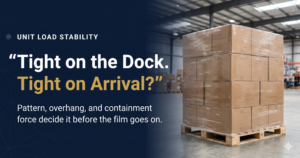
A package designed in isolation may look great, but if it doesn’t cube out a pallet efficiently, you are shipping air.
- Pallet Configuration Engineering: Our engineers design the primary package with the pallet in mind. By adjusting a box’s dimensions by a fraction of an inch, we can often fit an entire extra layer of product on a pallet.
- The Multiplier Effect: Increasing pallet density by 10% or 20% reduces the number of trucks you need to ship the same amount of product. Over the course of a year, this translates into massive savings in freight spend and a significant reduction in your carbon footprint.
Stop Buying Boxes. Start Engineering Value.
If your packaging strategy focuses solely on getting the lowest price per box, you are stepping over dollars to pick up pennies. The real money is made by optimizing the system.
Korpack’s engineering team approaches every project with this mindset. We use CAD, prototyping, and data-driven analysis to design packaging that doesn’t just contain your product—it improves your bottom line.
Packaging is not a commodity. It is a strategic lever for profitability. It’s time to pull it.
→ Let’s talk about engineering more profit into your packaging.