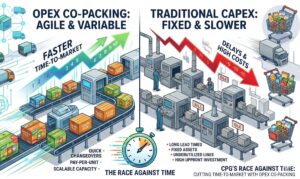

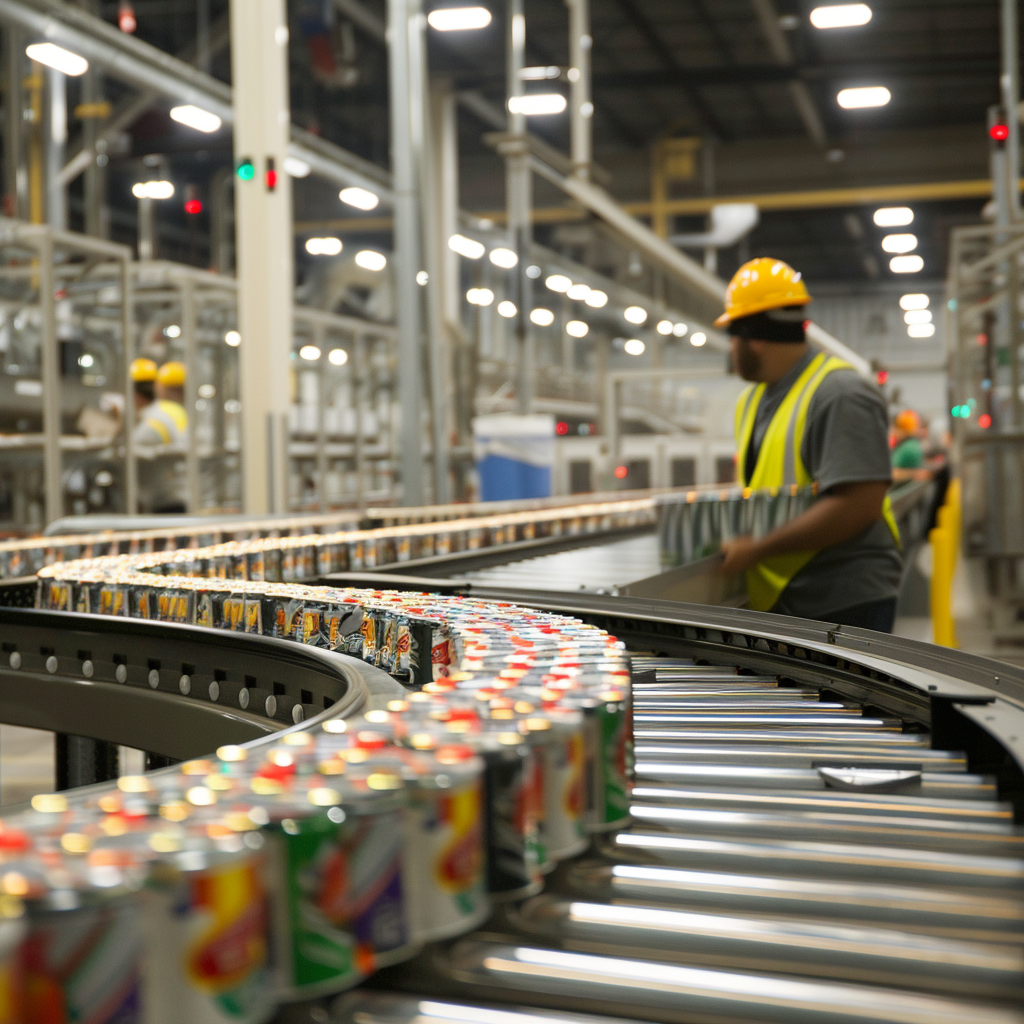
When scaling production, businesses often face challenges that can stifle growth—challenges such as managing increased output, maintaining quality standards, and optimizing packaging solutions. This is where a co-packer becomes indispensable. A co-packer, or contract packager, is a company that can produce, assemble, kit, warehouse, and distribute their products.
The contract packager may also help with primary and secondary packaging of finished goods, point-of-purchase display builds, inventory management, and distribution allowing those businesses to focus on their core competencies while leaving the complexities of packaging and distribution to experts.
Korpack has established itself as an emerging leader in the co-packing industry, offering a comprehensive suite of services designed to enhance packaging efficiency and meet the diverse needs of its partners.
With state-of-the-art technology, industry certifications, and a commitment to quality, Korpack provides tailored solutions that streamline operations, manage costs, and improve product marketability.
In this guide, we’ll explore how to select the right co-packer for your business, ensuring a partnership that not only meets but exceeds your operational and strategic expectations.
This process involves understanding your specific needs, identifying potential co-packers that can meet those needs, and establishing a relationship that fosters both immediate and long-term growth.
Understanding Your Business Needs
The first step in selecting the right co-packer is to thoroughly understand your own business needs. This analysis is critical as it informs every other decision in the co-packing partnership process.
Key areas to consider include:
- Production Volume: Assess your current and future production needs. Understanding the volume you need, both minimum and maximum, will help you determine if a co-packer has the capability to scale with your growth.
- Product Specificity: Consider the specific requirements of your product, such as temperature control, shelf life, and sensitivity to handling. This will help you find a co-packer with the right facilities and expertise.
- Scalability Needs: If your market demand fluctuates seasonally or if you are planning rapid growth, you need a co-packer that can flexibly accommodate these changes without compromising on delivery or quality.
- Packaging Requirements: Determine what type of packaging you need based on your product and customer base. This could range from primary packaging like pouches and cartons to secondary packaging like display cases or bulk packaging.
By clearly outlining what you need, you can better align with a co-packer that not only meets these requirements but also possesses the capability to adapt to your business as it evolves.
Criteria for Selecting a Co-Packer
Choosing the right co-packer involves evaluating several critical factors that will affect your product’s quality, your brand’s reputation, and your overall operational efficiency.
Here are the key criteria to consider:
- Expertise and Experience: Look for a co-packer with a solid track record in your industry or with similar products. Their experience can provide insights and efficiencies that newer companies might not offer.
- Certifications and Standards: Essential certifications like USDA, SQF, FDA, and ISO 9001:2015 indicate a co-packer’s commitment to quality and compliance. These certifications are often required in food, pharmaceuticals, and other regulated industries.
- Technological Capabilities: Advanced technology, such as ERP systems and real-time visibility platforms, ensures that the co-packer can offer precision and efficiency. For instance, Korpack’s cloud-based customer portal allows for 24/7 real-time visibility into operations, which is crucial for managing your supply chain effectively.
- Capacity and Flexibility: Evaluate the co-packer’s ability to handle your current and future volumes. Also, assess their flexibility in dealing with production schedule changes, which is vital for responding to market demands.
- Cost-Effectiveness: Understanding the cost structure is crucial. A fixed cost structure helps in budgeting and reducing financial uncertainty, making it easier to plan and allocate resources effectively.
- Value-Added Services: Additional services such as expert advice on packaging design, redundancy measures, and comprehensive shipment tracking can significantly enhance the value a co-packer brings to your operations.
By exploring these factors, you can narrow down potential co-packers that are best suited to meet your specific needs and contribute to the success of your business.
Evaluating Potential Co-Packers
Once you have defined your needs and identified co-packers that meet your criteria, the next step is to thoroughly evaluate these potential partners.
Here’s how you can approach this crucial phase:
- Site Visits and Meetings: Arrange to visit the facilities of the co-packers you are considering. This allows you to observe their operations firsthand, assess the technology and equipment they use, and gauge the cleanliness and organization of their work environment. Meetings with the management and operational teams also provide insights into their expertise and customer service approach.
- Customer Service and Communication: Effective communication is key to any successful partnership. Evaluate how the co-packer handles inquiries and their process for ongoing communication. Do they offer a dedicated account manager? How do they handle issue resolution and status updates? A co-packer like Korpack, which emphasizes ongoing communication and updates, can be invaluable.
- References and Case Studies: Ask for references and case studies from the co-packers. This will give you a better understanding of their capabilities and the satisfaction levels of their current and past clients. Pay special attention to any examples that are similar to your own business situation.
- Review Proposals and Quotes: Once you request proposals, compare them carefully. Look beyond just the costs; examine the services offered, the terms of the contract, and any value-added services that can benefit your business.
- Assess Compatibility: The right co-packer should align with your company’s culture and long-term goals. Their business values, commitment to sustainability, and innovation capabilities should complement your own strategic direction.
Finalizing the Partnership With Your Co-Packer
Choosing the right co-packer is a significant decision, and once you’ve identified a potential partner, there are a few more steps to ensure a successful collaboration:
- Contract Negotiation: Be clear about your expectations and ensure they are reflected in the contract. Discuss critical elements such as pricing, minimum order quantities, turnaround times, and quality control measures. Clearly define roles and responsibilities, and include clauses that cover scenario planning for unexpected challenges.
- Trial Runs and Ramp-Up: Before fully committing, you might consider conducting trial runs with the co-packer. This can help you identify any potential issues and ensure that the co-packer can meet your expectations before ramping up to full production.
- Establish Clear Metrics for Evaluation: Set up key performance indicators (KPIs) to continuously assess the co-packer’s performance. These could include metrics on product quality, adherence to schedules, inventory management, and response times for communication.
Leveraging Your Co-Packer Relationship
After finalizing the partnership, actively manage and nurture the relationship with your co-packer:
- Strategic Partnership: Treat your co-packer as a strategic partner rather than just a vendor. Engage them in planning sessions, seek their advice on efficiency improvements, and discuss future growth opportunities.
- Ongoing Evaluation and Adaptation: Regularly review the partnership’s performance against the established KPIs. Be open to making adjustments as your business needs change and as market conditions evolve.
Choosing the right co-packer is crucial for enhancing your operational capabilities and driving business growth. By thoroughly understanding your needs, carefully selecting a co-packer, and fostering a strong partnership, you can ensure that your products are efficiently produced and beautifully packaged, ready to meet the demands of your customers.
Remember, a co-packer like Korpack not only offers extensive packaging solutions but also becomes an integral part of your strategy to outperform competition and satisfy consumer expectations.
If you’re ready to transform your packaging process and scale your production with a reliable co-packing partner, contact Korpack today.
Let us help you meet your packaging challenges with our comprehensive, tailored solutions.