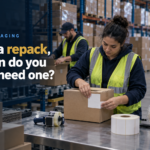


Here is a good problem that feels like a bad one at two in the afternoon on a Tuesday. A retail order came in larger than forecast, or a promotion took off, or a product went viral, and now the demand is real and the window is close. The product exists. The materials exist. What does not exist, this week, is enough pack-out capacity to turn all that finished product into shelf-ready, retailer-compliant units in time to ship. Your line is already running flat out, and the overflow has nowhere to go. This is an acute, right-now capacity problem, and it has a fast answer that does not involve building anything.
This guide is for the immediate version of that situation, the order is here and the clock is running, not the long-term question of how to plan capacity. It covers why pack-out is usually the piece that breaks first, why hiring your way out of a short spike rarely works, and how overflow pack-out capacity clears the surge and protects the ship date.
Why Pack-Out Is the Piece That Breaks First
When volume spikes, the constraint is rarely the making of the product. It is everything that happens to the product after it is made. A brand can have the finished goods on hand and still miss the window, because a shipment that is produced, allocated, and ready can still fail to leave the building if the pack-out step, the labeling, the multipacks, the retail-ready cases, the display builds, cannot keep up. In a surge, that secondary packaging layer is usually the first thing to clog, for a simple reason: it is the most labor-intensive part of the operation, and labor is the hardest input to add on short notice.
And the failure cascades. A missed ship window does not just delay one order; it pushes work into the next day, which steals capacity from the orders that were supposed to ship then, which compounds the backlog. In retail specifically, missing the delivery window can cost more than a late order: it can mean a lost receiving slot, a chargeback, and in the worst case a missed on-shelf date for a promotion that does not come around again. The pack-out bottleneck is where a demand win quietly turns into a fulfillment crisis.
Why You Cannot Hire Your Way Out of a Short Spike
The instinct when volume jumps is to add people. For a sustained increase, that is right. For a short, sharp spike, a three-week promotion, a one-time large order, a seasonal peak, it usually is not, and the math is why.
Hiring, training, and supervising a packaging crew takes time the spike does not give you. By the time a newly hired team is trained and productive, the window has often already closed. Temporary staffing helps at the margin, but a crew that does not know your product, your spec, or your line ramps slowly and makes more errors precisely when error tolerance is lowest. You end up carrying the cost and the management burden of a larger team for a peak that ends before the team is fully useful. Building permanent capacity for a temporary problem is how brands end up overbuilt after the surge passes.
The better model for a short spike is to buy capacity rather than build it: to reach a partner that already has the trained people, the certified space, and the automation, use it for the window that matters, and give it back when the window closes. That is what overflow pack-out capacity is.
Overflow capacity is on-demand access to extra labor, space, and equipment for when normal capacity is exceeded, without permanently expanding a facility or hiring full-time staff. It is a safety valve, not a second factory. A brand that runs out of pack-out capacity during a surge contracts a partner to absorb the overflow for the weeks it lasts, keeps its ship dates, and returns to normal when demand does. The core production stays exactly where it is; only the surge of secondary packaging moves.
What Actually Moves to an Overflow Partner
The work that shifts to an overflow partner during a surge is the retail-specific pack-out that the spike created, not the production. In practice that is:
- Variety, club, and multipack pack-outs, collating the right units and counts into the formats the order requires.
- Retail-ready cases and shoppable displays, built to the retailer’s merchandising and compliance requirements so the surge volume still ships compliant.
- Labeling, coding, and relabeling, applied at volume and kept accurate under time pressure.
- Shrink sleeving, overwrapping, and cartoning, the secondary formats that turn produced units into retail units.
- Kitting and light assembly, for promotional packs, bundles, and retailer-specific assortments.
None of this is the production itself. It is the layer of work between a finished product and a shelf-ready one, which is exactly the layer that runs short of hands when volume spikes. Moving it to a partner with spare, trained capacity is what keeps the whole order on schedule.
What Makes Overflow Work Under a Deadline
Not all overflow capacity is equal when the clock is the problem. A few things determine whether it actually saves the window:
- Materials and labor from one place. A surge often needs more than hands; it needs more labels, cartons, film, and trays too. When those come from the same partner as the crew, they are sourced and scheduled together, with no second vendor to chase and no gap between materials arriving and work starting. On a deadline, that single-source coordination is frequently the difference between hitting the window and missing it.
- Certified, ready space. For food and beverage, the overflow has to run to the same standards as the brand’s own line, which means certified facilities with lot and expiration tracking, not just extra bodies in a warehouse.
- Capacity that scales to the job. Surge work scales with crew size and shift count rather than a single fixed line, so the right partner sizes the crew and the schedule to the specific order and the specific date, rather than quoting against a standard ceiling.
- Visibility while it runs. When a deadline is tight, knowing where the run stands in real time, rather than waiting on a daily update, is part of what keeps the ship date reliable.
The Bigger Picture, Briefly
Clearing this week’s surge is the urgent job. It is worth noting, though, that a spike that outran your pack-out is often an early signal of something larger: demand is growing past what the current arrangement can serve. Handling the immediate overflow protects this order. Recognizing the pattern, and deciding whether to add standing overflow capacity alongside your production, is the strategic version of the same question, and it is the difference between scrambling every peak and having a plan for it. For now, though, the priority is simple: clear the surge and hit the window.
How Korpack Helps
Korpack provides surge capacity support as part of its emergency repack service: overflow pack-out that absorbs a demand spike so it becomes shipped product instead of a missed ship window. When a retail order lands larger than forecast or a SKU moves faster than the plan, the overflow runs at Korpack rather than becoming a fill-rate problem.
What makes it work on a deadline is that the crews, the certified space, and the packaging materials come from one partner. Labels, corrugated, cartons, film, and trays are quoted and scheduled alongside the labor, in certified facilities with lot and expiration tracking and real-time visibility into the run, so there is no second vendor to chase and no gap between materials landing and the crew being ready. Capacity scales with crew size and shift count rather than a single fixed line, so the job is sized to the order and the date rather than a standard ceiling.
One boundary, stated the same way Korpack states it everywhere: this is secondary packaging and pack-out of product that is already made. No product manufacturing and no filling. The producer makes and fills it; Korpack absorbs the surge of pack-out around it so the order ships on time. Where a surge turns out to be the new normal rather than a one-time peak, the same capacity can be added on a standing basis, which is the strategic side of the same problem covered in our writing on the moment a retail win outruns a brand’s existing pack-out.
A demand spike should be a good day, not a missed window. When the constraint is pack-out, the fix is to borrow capacity for the peak, not to build it for a peak that ends.
Korpack’s surge capacity support absorbs overflow pack-out, variety and club packs, retail-ready cases, labeling, and kitting, so a demand spike ships on time. Materials and labor on one PO, certified facilities, sized to your order and your date. A short call establishes the scope, the crew plan, and whether the window is still reachable.
855.567.7225 | korpack.com/emergency-repack-services
Frequently Asked Questions
What is overflow pack-out or surge capacity?
Overflow capacity is on-demand access to extra labor, space, and equipment for when your normal capacity is exceeded, without permanently expanding a facility or hiring full-time staff. Overflow pack-out applies that specifically to the secondary packaging work, labeling, multipacks, retail-ready cases, kitting, that spikes when a demand surge hits. A brand contracts a partner to absorb the pack-out overflow for the weeks the surge lasts, keeps its ship dates, and returns to normal when demand does. The core production stays in place; only the surge of pack-out moves.
Why does pack-out become the bottleneck when demand spikes?
Because it is the most labor-intensive part of the operation, and labor is the hardest input to scale quickly. A brand can have finished product on hand and still miss its window if the pack-out step, turning produced units into labeled, multipacked, retail-ready cases, cannot keep up. A surge multiplies that work faster than a team can be expanded, so the secondary packaging layer clogs before the production layer does. And a missed window cascades, pushing work into the next day and stealing capacity from the orders that should have shipped then.
Should I hire temporary staff or use an overflow partner?
For a short, sharp spike, an overflow partner is usually the better answer. Hiring, training, and supervising a packaging crew takes time a brief surge does not give you, and a crew that does not know your product and spec ramps slowly and makes more errors when error tolerance is lowest. You also carry the cost and management of a larger team for a peak that ends before the team is fully productive. A partner that already has trained people, certified space, and automation can take the overflow for the window that matters and hand capacity back when it closes. For a sustained increase, permanent hiring makes more sense; for a temporary one, buying capacity beats building it.
Can overflow pack-out keep food and beverage product compliant?
Yes, if it runs in the right facility. For food and beverage, overflow work has to meet the same standards as the brand’s own line, which means certified facilities with lot and expiration tracking, not simply extra hands in a warehouse. A qualified overflow partner handles the surge to the same certification, documentation, and traceability the product would see in-house, and sizes the crew and schedule to the specific order and ship date. Pairing the materials and the labor from one partner is what keeps a compliant surge on time.
- Overflow and surge-capacity references, 2025-2026 (including Racklify overflow-capacity encyclopedia entries, Porter Logistics and Extensiv warehouse-overflow glossaries, and Olimp Warehousing 2026 logistics-challenge coverage). Source for overflow capacity as on-demand extra labor, space, and equipment accessed without permanent expansion or full-time hiring, the trigger situations (seasonal peaks, flash sales, viral demand, larger-than-forecast orders, promotions, rapid growth), surge labor via contracted pick-and-pack teams, and the example of contracting temporary capacity for a short window rather than building a new bay.
- Ship-window and execution-readiness references, 2025-2026 (including ShipBob critical-pull-time guidance, ShipERP peak-season execution-readiness coverage, and 2026 e-commerce-versus-retail growth data). Source for a produced, allocated, ready shipment still missing its window when pack-out or compliance cannot keep up, a missed window cascading into backlog that steals the next day’s capacity, viral or promotional demand multiplying volume quickly, and execution readiness rather than carrier capacity being the primary peak-season risk. E-commerce growth outpacing total retail growth is drawn from 2026 US Census-based reporting.
- Korpack Emergency Repack Services and Marketing Guidelines, 2026 and November 2023. Source for Korpack’s surge capacity support (overflow pack-out: variety and club packs, retail-ready cases and displays, labeling, kitting), materials and labor quoted on one purchase order, certified facilities with lot and expiration tracking and real-time visibility, and capacity that scales with crew size and shift count. Korpack performs secondary packaging and pack-out of already-made product; it does not manufacture or fill product.
Korpack is a technologically advanced packaging materials, contract packaging, and automation supplier that approaches solutions with an engineering mindset and creative flexibility. Founded by a packaging engineer, Korpack runs emergency repack, relabeling, and rework in certified facilities across the Chicagoland area. This article is provided for general information; confirm the capacity, certifications, and timelines your specific order requires for your situation.