

US CPG Brands Now Demand Real-Time Data From Their Co-Packers. Can Yours Deliver?
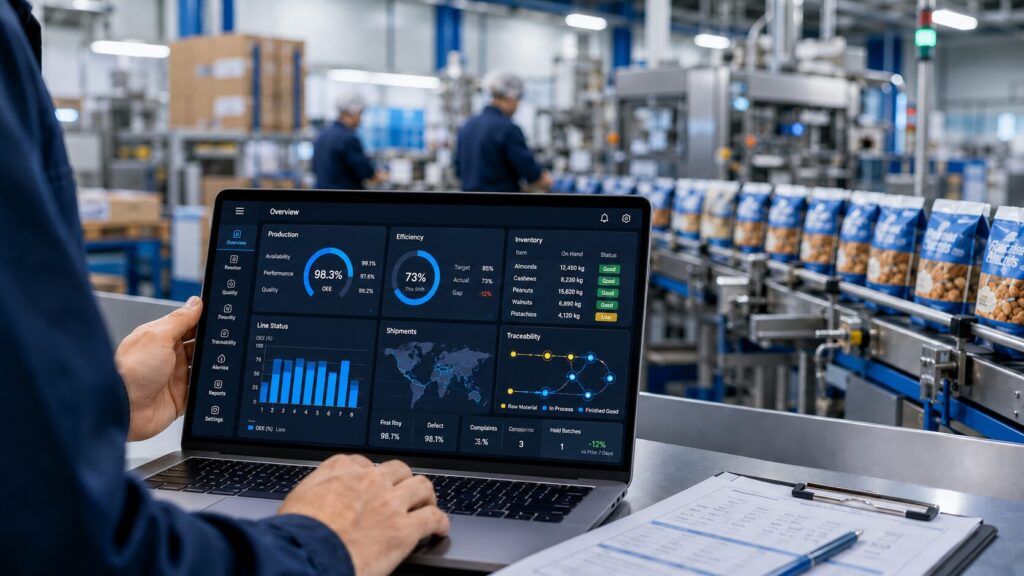
The Email That Used to Be Enough Isn’t Enough Anymore Five years ago, the relationship between a CPG brand and its co-packer looked like this: the brand shipped raw materials or product, the co-packer ran the line, the finished goods went out, and sometime in the following week or month, someone on the brand’s operations […]
Maine Led the Way. Now the Whole Map Is Changing.
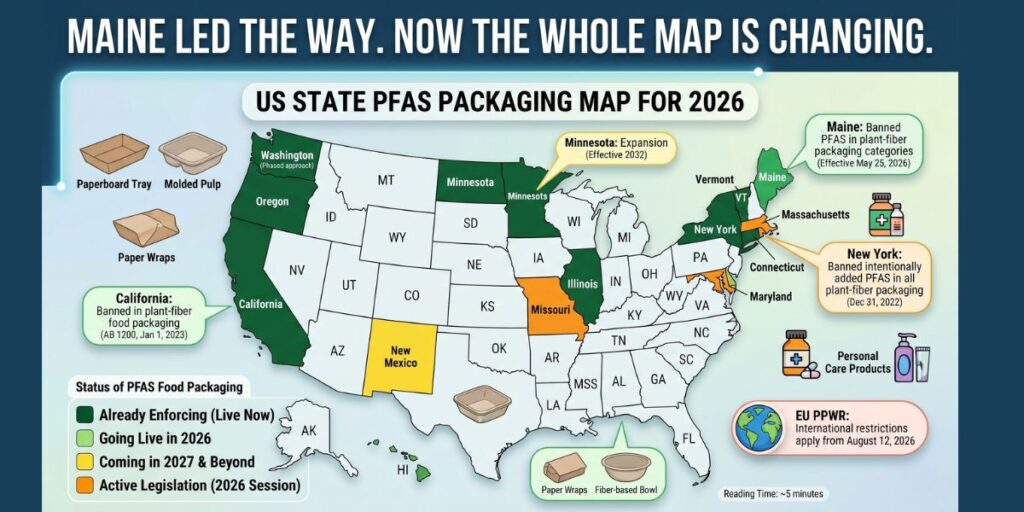
On May 25, 2026, Maine will enforce a ban on PFAS in nine categories of plant-fiber food contact packaging. If your paperboard trays, molded pulp containers, paper wraps, or fiber-based bowls contain intentionally added PFAS above incidental presence, they cannot legally be sold in Maine after that date. But here is the part most food […]
Why the Hidden Costs of Vendor Sprawl Have Become Impossible to Ignore in 2026
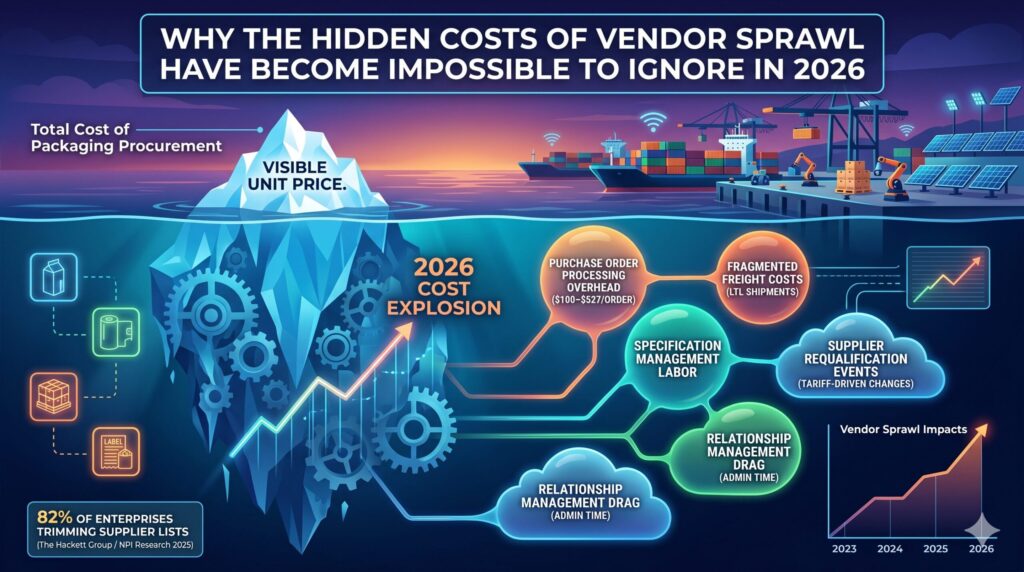
Ask a VP of Operations how many packaging vendors their company manages and the answer is usually vague. “Seven, maybe eight. Plus a couple we use for specialty stuff.” Ask the same person how much that vendor sprawl actually costs—not in unit pricing, but in total operational burden—and the answer is almost always: “I don’t […]
Amazon’s FFP and SIOC Rules Are Getting Stricter — Here’s What That Means for Your Packaging Spec
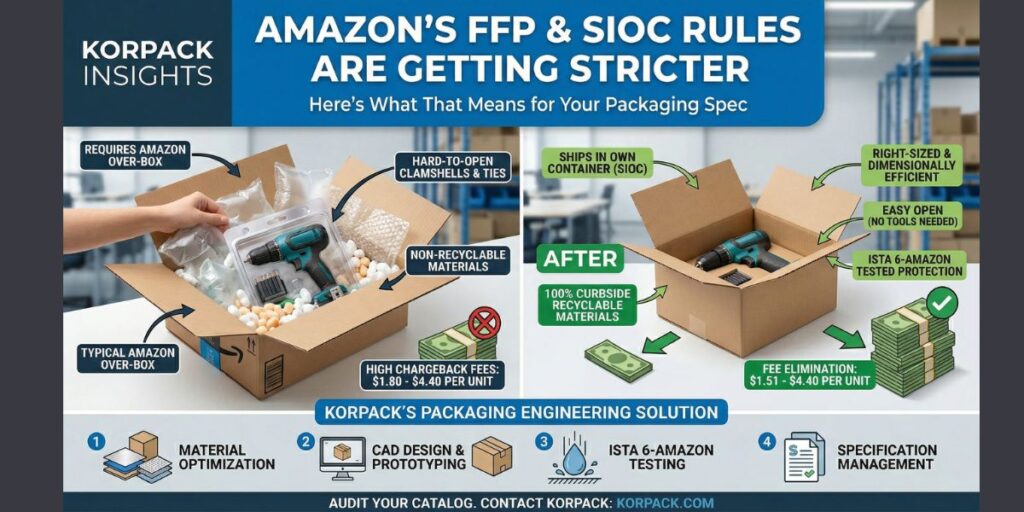
If you sell through Amazon and you have not updated your packaging specs in the last 12 months, you are probably losing money right now. As of January 15, 2026, Amazon began charging new packaging fees for small bulky and large bulky products that are not enrolled in its Ships in Product Packaging (SIPP) program—the […]
The 2027 Barcode Deadline That’s Already Here: What GS1 Sunrise Means for Your US Packaging Line
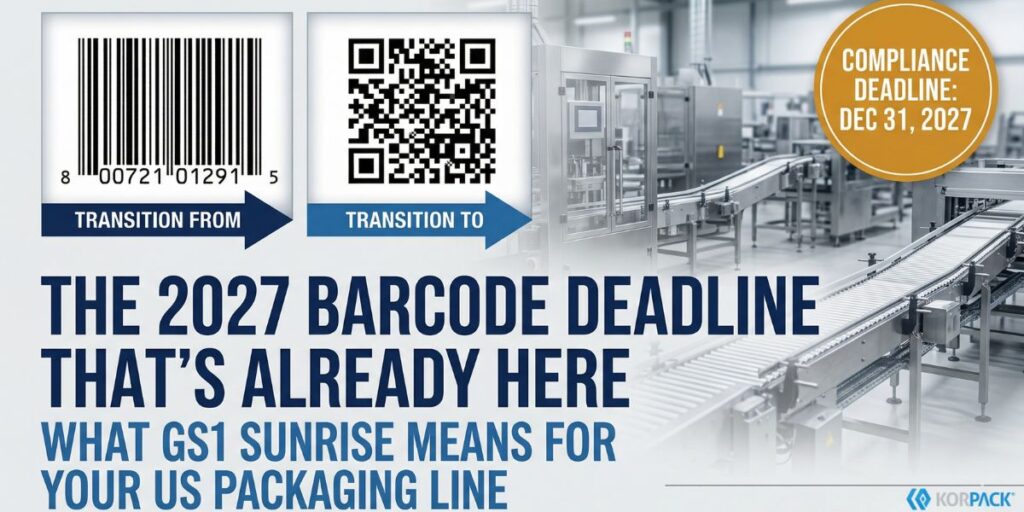
The barcode as you know it is about to change. By December 31, 2027, every major retailer in North America is expected to scan a new generation of two-dimensional (2D) barcodes at checkout. The initiative driving this shift is called GS1 Sunrise 2027, and it represents the most significant change to product identification standards in […]
CPG’s Race Against Time: Cutting Time-to-Market with OpEx Co‑Packing
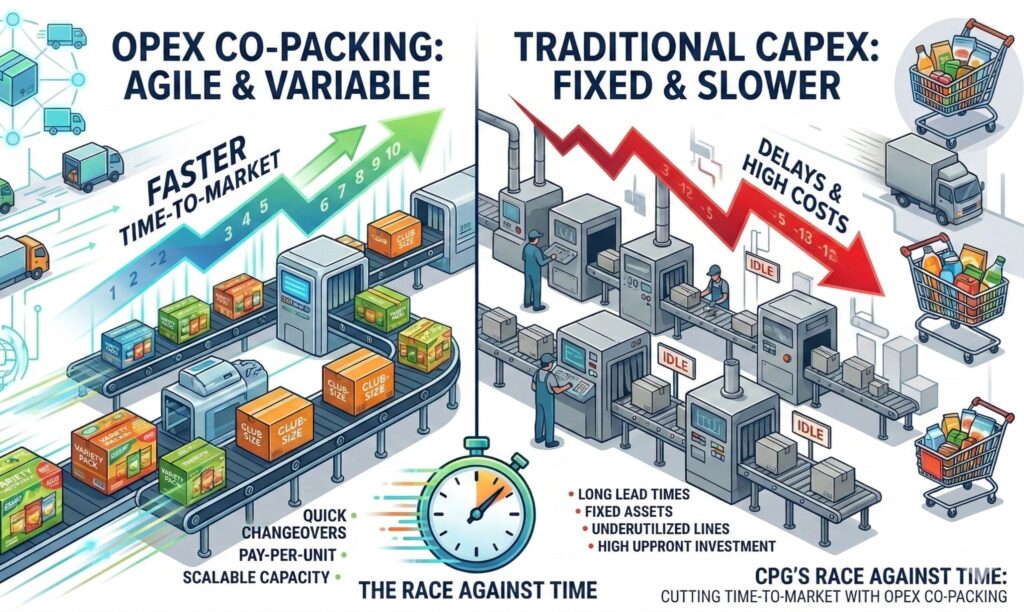
Consumer Packaged Goods (CPG) companies are under more pressure than ever to move faster. In 2025, major retailers like Walmart and Target ratcheted up On-Time In-Full (OTIF) delivery standards to nearly 98%, penalizing delays with fines of about 3% of COGS (Cost of Goods Sold). At the same time, raw material prices swung unpredictably and […]
The 2026 EPR Expansion Map: Why 7 States Are Just the Beginning
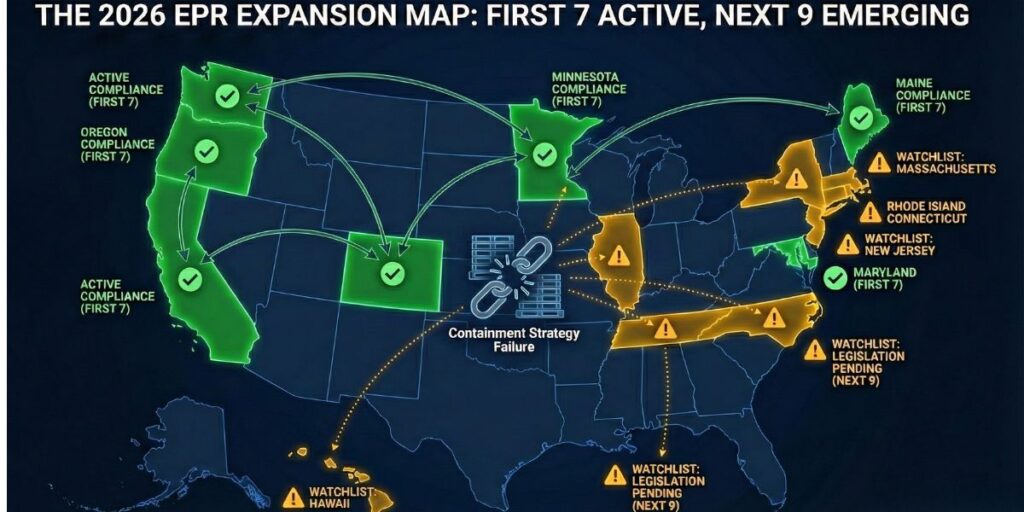
As of February 2026, the first wave of Extended Producer Responsibility (EPR) is officially live. The checks have cleared for producer dues in Colorado, data reporting is active in California, and teams are scrambling for the May registration deadline in Maine. For many Food & Beverage manufacturers, the strategy so far has been containment: “We […]
Understanding Eco-Modulation: How Packaging Choices Determine Your EPR Fees
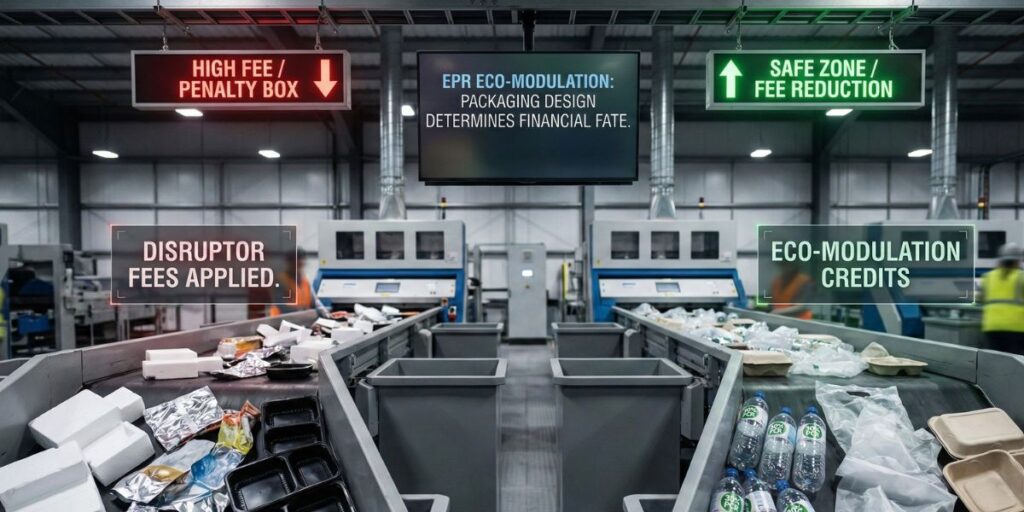
Under the new Extended Producer Responsibility (EPR) laws active in 2026, not all packaging is created equal. While the base fees cover the cost of recycling, the real financial lever is “Eco-Modulation.” This is the mechanism states use to penalize “bad” design and reward “good” design. For Food & Beverage manufacturers, understanding these variables is […]
EPR Update: The 2026 Compliance Reality Check for F&B
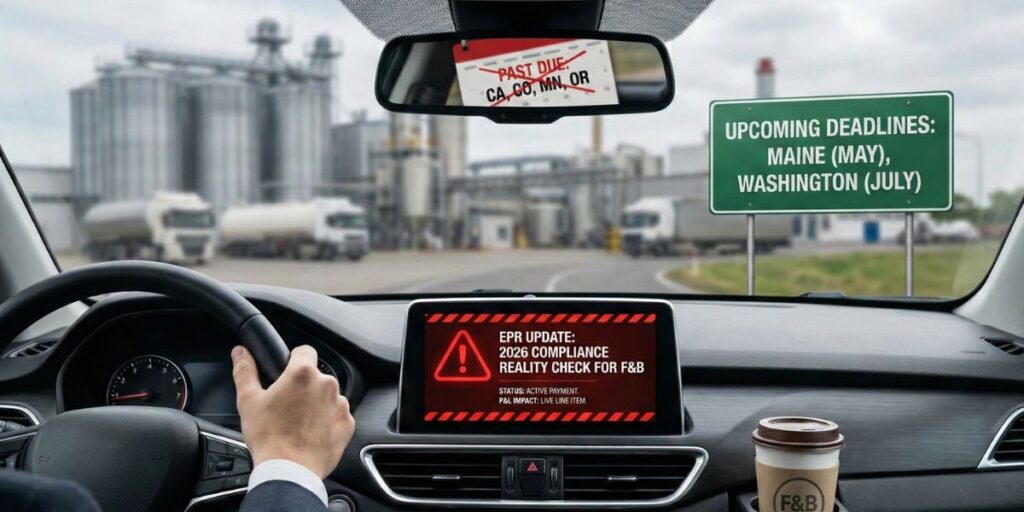
We are one month into 2026, and the landscape of packaging compliance has officially shifted from “planning” to “payment.” For Food & Beverage leaders, Extended Producer Responsibility (EPR) is no longer a theoretical policy discussed in webinars. It is a live line item on your P&L. If you distribute packaged goods into California, Colorado, Minnesota, […]
The Warehouse Labor Cliff: Why the ‘Temp’ Strategy is Dead
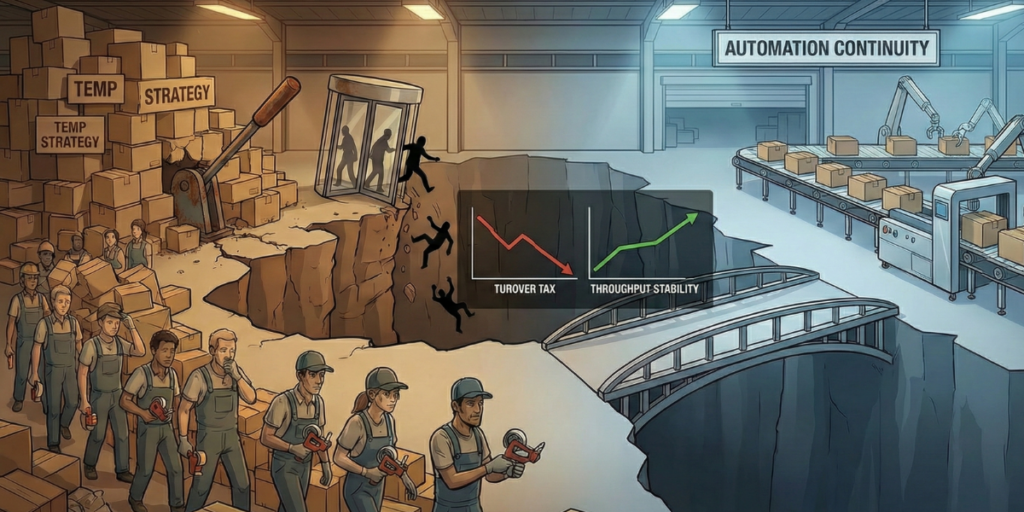
For two decades, the standard playbook for warehouse peak season was simple: “Hire more temps.” If Q4 volume surged 30%, you increased headcount by 30%. It was a reliable, linear lever. In 2025, that lever broke. We analyzed labor data across the logistics sector, and the trend is stark. The industry has hit a “Labor […]